
Gabrielle de Bergerac
by Henry James
A Subtle Henry James Novel of Duty, Desire, and Personal Freedom
Gabrielle de Bergerac by Henry James is an elegant and psychologically nuanced novel exploring the conflict between individual happiness and the demands of family, society, and tradition. Written early in James's career but published many years later, the work contains many of the themes that would come to define his mature fiction: emotional restraint, social expectations, moral choice, and the hidden complexities of human relationships.
Set within the refined world of French aristocratic society, the novel centers on a young woman whose life is shaped by obligations imposed upon her by family and class. As opportunities for love and personal fulfillment emerge, Gabrielle must confront difficult choices between duty and desire, obedience and independence.
Though quieter than many conventional romances, the novel derives its power from emotional subtlety and the careful examination of character. James is less interested in dramatic events than in the inner struggles that accompany significant life decisions.
The work blends psychological realism, social observation, and romantic tragedy.
The Story of Gabrielle
Gabrielle de Bergerac is portrayed as intelligent, sensitive, and deeply aware of the expectations surrounding her. Living within a society governed by rank, reputation, and family interests, she possesses limited freedom to determine her own future.
As the narrative unfolds, Gabrielle encounters circumstances that challenge her acceptance of these constraints. Questions of marriage, affection, and personal autonomy become increasingly important.
Her situation reflects broader tensions common in nineteenth-century society:
- The conflict between personal desire and family obligation.
- The influence of social class upon individual choice.
- The expectations placed upon women.
- The sacrifices demanded by convention.
- The pursuit of happiness within restrictive environments.
These conflicts give the novel emotional depth and enduring relevance.
The French Setting and Social World
Henry James frequently displayed a fascination with European culture, particularly the contrast between individual freedom and social tradition. In Gabrielle de Bergerac, the French aristocratic setting provides a rich environment for examining questions of honor, duty, and reputation.
The world depicted in the novel is governed by subtle social rules. Decisions that appear personal often carry consequences for entire families, making individual happiness difficult to pursue without conflict.
James uses this environment not merely as a backdrop but as an active force shaping the characters' choices and emotional lives.
The Literary Style of Henry James
Henry James is celebrated for his ability to explore psychological complexity with extraordinary precision. His writing often focuses on the thoughts, perceptions, and moral dilemmas of his characters rather than external action.
In this novel, readers can find many characteristics associated with his fiction:
- Careful character development.
- Subtle emotional conflict.
- Sophisticated social observation.
- Refined and elegant prose.
- Moral and psychological depth.
James invites readers to consider not only what his characters do, but why they make the choices they do.
Main Themes and Emotional Reflection
The novel explores several interconnected themes:
- Duty versus desire: The tension between obligation and personal fulfillment.
- Female autonomy: The struggle for self-determination within restrictive social structures.
- Love and sacrifice: The emotional costs of difficult choices.
- Social expectation: The influence of class and family on individual lives.
- Moral responsibility: The challenge of acting according to conscience.
These themes give the work a timeless quality that extends beyond its historical setting.
Why the Novel Still Holds Importance
Gabrielle de Bergerac remains significant because it offers an early example of Henry James's remarkable ability to combine social observation with psychological insight. The novel reveals the foundations of artistic concerns that would later make him one of the most respected novelists in English literature.
Readers interested in character-driven fiction often appreciate the book's emotional intelligence and refusal to provide simplistic solutions to complex human problems.
Its exploration of personal freedom and social constraint continues to resonate with modern audiences.
The Lasting Legacy of Henry James
Henry James helped transform the modern novel by demonstrating how subtle psychological analysis could become the center of literary storytelling. His works influenced generations of writers interested in consciousness, perception, and moral ambiguity.
Although Gabrielle de Bergerac belongs to an earlier stage of his career, it clearly anticipates many of the qualities that would define his later masterpieces.
The continuing admiration for James's fiction ensures that works such as this remain important parts of literary history.
Final Thoughts
Gabrielle de Bergerac by Henry James is a graceful and emotionally sophisticated novel examining the difficult choices that arise when personal happiness conflicts with social obligation. Through careful characterization and psychological insight, James creates a moving portrait of a woman seeking dignity and meaning within the constraints of her world.
For readers interested in literary fiction, nineteenth-century society, psychological realism, and the development of Henry James's art, this novel remains a rewarding and thought-provoking experience.
Similar Genres
About the Author
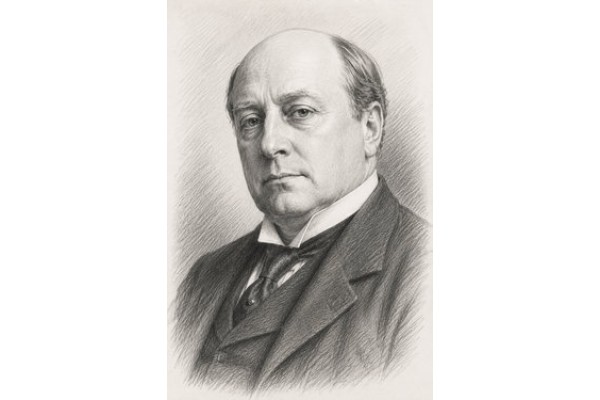
Henry James was one of the most influential novelists of the late nineteenth and early twentieth centuries, renowned for bringing exceptional psychological depth to fiction. Born in New York in 1843, he later settled in Europe, where his experiences shaped a distinctive literary voice that blended American perspectives with European culture. Explore Henry James books to discover the author's life, literary career, and access notable works, including Daisy Miller - A Study, The Turn of the Screw, The Point of View, The Pension Beaurepas , and more.