
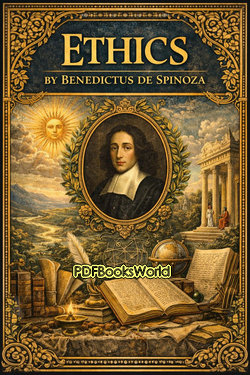
Ethics
by Benedictus de Spinoza
A Profound Philosophical Work About Reason, Nature, and Human Freedom
Ethics by Benedictus de Spinoza is one of the most important philosophical works of the seventeenth century. Published after Spinoza’s death in 1677, the book presents a systematic exploration of reality, human emotions, morality, and the relationship between God, nature, and human existence.
The work became highly influential because of its bold ideas about reason, freedom, and the natural world. Spinoza approached philosophy through logical argument and mathematical structure, helping shape the development of rationalist philosophy and modern thought.
About the Author
Benedictus de Spinoza was a Dutch philosopher widely regarded as one of the most original thinkers in Western philosophy. His writings challenged traditional religious and philosophical ideas while emphasizing reason, ethics, and intellectual freedom.
Although controversial during his lifetime, Spinoza later became recognized as a major influence on philosophy, political theory, psychology, and modern secular thought.
Main Themes of the Book
Ethics explores the nature of reality and humanity’s place within the universe. Spinoza argues that everything exists as part of a single natural system governed by logical and necessary laws.
Important Themes Discussed
- Reason and human understanding
- The relationship between God and nature
- Human emotions and self-control
- Freedom, happiness, and ethical living
Spinoza believed that understanding the natural order of existence could help people overcome fear, confusion, and emotional suffering.
The Connection Between God and Nature
One of Spinoza’s most famous ideas is that God and nature are not separate. Instead, he describes God as the infinite substance that exists throughout all reality.
This philosophical view challenged traditional religious teachings and encouraged a more rational and natural understanding of existence. Spinoza believed that true freedom comes from understanding the causes behind human emotions and actions.
What Makes the Work Unique
- Logical and mathematical structure
- Bold philosophical ideas about nature and existence
- Strong influence on modern philosophy and ethics
Writing Style
Spinoza’s writing style is formal, logical, and highly structured. He organizes arguments through definitions, propositions, and demonstrations similar to mathematical proofs.
Although intellectually demanding, the work presents a carefully organized philosophical system that rewards thoughtful reading and reflection.
Historical Importance
Ethics became one of the foundational works in the history of modern Western philosophy. Spinoza’s ideas influenced later thinkers in philosophy, political theory, psychology, and science.
Historical Features
- Development of rationalist philosophy
- Influence on Enlightenment thought
- New perspectives on religion, ethics, and freedom
The work also contributed to broader intellectual movements that emphasized reason, scientific inquiry, and personal freedom.
Lessons for Modern Readers
Modern readers continue to study Ethics because of its deep exploration of human emotion, rational thought, and ethical living. Spinoza’s ideas encourage readers to seek understanding, emotional balance, and intellectual independence.
The book also offers valuable insight into how philosophical reasoning can help individuals better understand themselves and the world around them.
Conclusion
Ethics by Benedictus de Spinoza remains a landmark work of philosophy that explores reason, nature, freedom, and human happiness. Through logical analysis and profound insight, Spinoza created a philosophical system that continues to influence thinkers and readers across the world today.
Similar Genres
About the Author
Benedictus de Spinoza, also known as Baruch Spinoza, was a Dutch philosopher of Portuguese-Jewish descent whose groundbreaking ideas transformed the course of Western philosophy. Born in Amsterdam in 1632, Spinoza challenged conventional religious and philosophical doctrines through his rational approach to metaphysics, ethics, politics, and human freedom. Explore Benedictus de Spinoza books to discover the author's life, literary career, and access notable works.