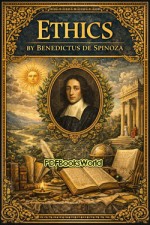
Benedictus de Spinoza
Benedictus de Spinoza, also known as Baruch Spinoza, was a Dutch philosopher of Portuguese-Jewish descent whose groundbreaking ideas transformed the course of Western philosophy. Born in Amsterdam in 1632, Spinoza challenged conventional religious and philosophical doctrines through his rational approach to metaphysics, ethics, politics, and human freedom. Although many of his ideas were considered controversial during his lifetime, his commitment to reason, intellectual independence, and the pursuit of truth earned him lasting recognition as one of the greatest philosophers of the Enlightenment. His writings continue to influence philosophy, theology, political theory, psychology, and modern scientific thought.
A Philosophy Founded on Reason
Spinoza believed that understanding the universe required the careful application of reason rather than reliance on superstition or unquestioned authority. His philosophical system explored the nature of God, reality, human emotions, free will, and morality, presenting a unified vision in which nature and existence were governed by universal laws. Writing with remarkable logical precision, he encouraged readers to seek wisdom through rational inquiry and intellectual freedom. His profound insights into ethics, human behavior, and the pursuit of happiness continue to inspire scholars and thoughtful readers around the world.
Ethics, Spinoza's masterpiece, presents his complete philosophical system through a series of definitions, axioms, propositions, and logical demonstrations modeled after Euclidean geometry. The work examines the nature of God, the human mind, emotions, virtue, and freedom, ultimately arguing that true happiness is achieved through reason and the understanding of reality. It remains one of the most influential philosophical works ever written.
Essential Works
- Ethics presents Spinoza's complete philosophical system, exploring God, nature, human emotions, morality, and the path to genuine freedom through reason.
- Theologico-Political Treatise defends freedom of thought and examines the relationship between religion, Scripture, politics, and democratic government.
- Political Treatise investigates the principles of political authority, constitutional government, and the organization of stable and free societies.
- On the Improvement of the Understanding explores methods of acquiring reliable knowledge and developing sound philosophical reasoning.
- Principles of Cartesian Philosophy presents and analyzes the philosophy of René Descartes while laying the foundation for Spinoza's own philosophical development.
An Enduring Legacy in Western Philosophy
Benedictus de Spinoza's writings continue to shape intellectual thought through their logical rigor, philosophical depth, and unwavering commitment to reason. From Ethics and the Theologico-Political Treatise to his political and epistemological works, his writings remain foundational texts in philosophy and political theory. His enduring legacy continues to influence thinkers across disciplines while encouraging readers to pursue truth, intellectual freedom, and a deeper understanding of humanity and the natural world.
If you enjoy philosophy, ethics, political thought, theology, and the history of ideas, the works of Benedictus de Spinoza are well worth exploring. At PDFBooksWorld, you can discover a carefully curated collection of his enduring writings and experience the profound ideas of one of history's greatest philosophers.