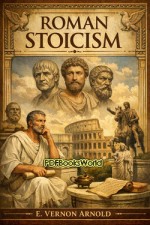
E. Vernon Arnold
E. Vernon Arnold was an English classical scholar, educator, and historian whose work helped make the philosophy and literature of the ancient world more accessible to modern readers. As a respected authority on Greek and Roman civilization, Arnold devoted much of his academic career to studying classical philosophy, language, and history. His writings combined careful scholarship with clear explanations, enabling students and general readers to appreciate the intellectual traditions that shaped Western thought. Roman Stoicism is among his most influential works, offering a comprehensive study of one of antiquity's most enduring philosophical schools.
A Scholar of the Classical World
E. Vernon Arnold spent many years teaching and researching classical subjects, developing a deep understanding of ancient Greek and Roman culture. His academic work reflected a belief that classical philosophy remained relevant because it addressed timeless questions about ethics, self-discipline, duty, and human happiness. Through his books and lectures, he introduced generations of readers to the ideas that influenced Western civilization for centuries.
Exploring the Philosophy of Stoicism
Arnold's research focused on explaining Stoicism not merely as a historical movement but as a practical philosophy of life. He examined the teachings of leading Stoic thinkers, showing how their ideas evolved from ancient Greece to Rome and influenced generations of philosophers, statesmen, and writers. His work emphasizes the Stoic ideals of reason, virtue, self-control, and resilience in the face of adversity.
Roman Stoicism traces the development of Stoic philosophy through its major figures and explores its influence on Roman society, politics, and literature. The book remains an important introduction to Stoic thought and its lasting intellectual legacy.
A Clear and Thoughtful Style
E. Vernon Arnold wrote with precision and clarity, presenting complex philosophical concepts in an organized and approachable manner. Rather than assuming extensive prior knowledge, he explained historical background, key ideas, and philosophical arguments with careful attention to context. His balanced approach allows readers to engage with classical philosophy without becoming overwhelmed by technical terminology.
His writings continue to serve as valuable resources for students of philosophy, history, and classical studies.
Notable Works
- Roman Stoicism – A comprehensive study of Stoic philosophy and its development in the Roman world.
- The Roman System of Provincial Administration – An examination of the organization and governance of the Roman Empire.
- Studies in Greek and Roman Literature – Essays exploring the literary traditions of the classical world.
- Classical Essays – Scholarly writings on ancient philosophy, history, and language.
- Lectures on Ancient Civilization – Educational works introducing readers to Greek and Roman culture.
An Enduring Contribution to Classical Scholarship
E. Vernon Arnold's scholarship continues to be respected for its depth, clarity, and thoughtful interpretation of the ancient world. His studies of Stoicism and Roman civilization remain valuable to readers seeking a deeper understanding of classical philosophy and its continuing relevance. His work demonstrates how ideas developed centuries ago continue to influence modern discussions of ethics, leadership, and personal character.
Readers interested in philosophy, classical history, and ancient literature will find lasting value in the writings of E. Vernon Arnold. Whether beginning with Roman Stoicism or exploring his other scholarly works, they will discover an author whose careful research continues to illuminate the wisdom of the classical world.