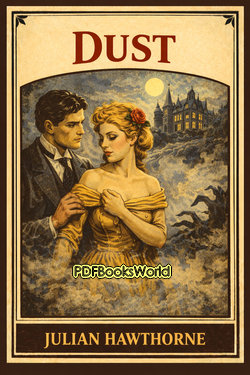
Dust
by Julian Hawthorne
A Novel of Decay, Ambition, and the Fragility of Human Illusion
In Dust, Julian Hawthorne creates a world where appearances gradually crumble and hidden truths rise quietly to the surface. The title itself carries symbolic weight. Dust suggests deterioration, forgotten lives, fading dreams, moral decline, and the inevitable passage of time that reduces even great ambitions to something fragile and temporary.
Rather than relying on sensational adventure alone, the novel unfolds through psychological tension, social observation, and emotional conflict.
Lives Built on Unstable Foundations
The characters move through a society shaped by reputation, personal ambition, hidden motives, and emotional dissatisfaction. Beneath ordinary routines lie deeper anxieties involving status, identity, desire, and moral compromise.
Hawthorne examines how carefully maintained appearances can conceal weakness or corruption.
As relationships become strained and secrets emerge, the sense of stability surrounding the characters slowly begins to collapse.
The Meaning Hidden Inside the Title
The word “dust” functions as more than a simple image. Throughout the novel, it suggests several interconnected ideas:
- The temporary nature of wealth and social success
- The erosion of personal ideals over time
- The emotional emptiness hidden beneath outward respectability
- The unavoidable decay connected with human life
This symbolic richness gives the story a reflective and often melancholy atmosphere.
Psychological Drama Instead of Simple Action
Unlike purely plot-driven fiction, much of the novel’s power comes from emotional and psychological pressure.
Characters wrestle with:
- Disappointment and frustrated ambition
- Conflicted romantic relationships
- Moral uncertainty and self-deception
- The fear of social failure or exposure
Conversations and personal decisions gradually reveal tensions that have existed beneath the surface all along.
The Influence of Nineteenth-Century Realism
Dust reflects literary movements interested in realism and psychological complexity rather than idealized storytelling. Hawthorne pays close attention to social behavior, emotional contradiction, and the hidden motivations driving ordinary people.
The novel suggests that human beings often struggle to understand themselves fully, especially when pride or desire clouds judgment.
This introspective quality gives the story emotional depth.
Julian Hawthorne’s Narrative Style
Julian Hawthorne writes with deliberate pacing and strong atmospheric control. His prose frequently emphasizes mood, emotional tension, and subtle character observation rather than rapid action.
Descriptions often carry symbolic undertones, allowing ordinary objects or settings to reflect deeper psychological meaning.
The result is a novel that feels reflective, uneasy, and quietly haunting.
Why Dust Still Holds Literary Interest
Dust remains intriguing because its themes involving ambition, disillusionment, moral uncertainty, and the fragility of identity continue to resonate with modern readers.
For readers interested in psychological fiction, nineteenth-century realism, symbolic storytelling, and emotionally layered social drama, Julian Hawthorne’s novel offers a thoughtful exploration of the quiet forms of decay hidden beneath respectable life.
Similar Genres
About the Author

Julian Hawthorne was an American novelist, biographer, journalist, and travel writer whose prolific literary career spanned fiction, history, mystery, and literary criticism. Born in Boston in 1846, he was the only son of the celebrated novelist Nathaniel Hawthorne. Explore Julian Hawthorne books to discover the author's life, literary career, and access notable works, including Library of the World's Best Mystery and Detective Stories, The Cosmic Courtship , and more.