
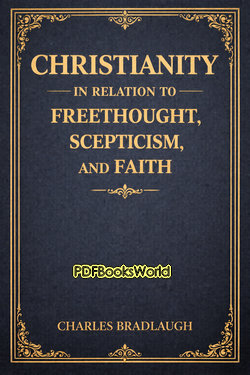
Christianity in relation to Freethought, Scepticism, and Faith
by Charles Bradlaugh
A Controversial Examination of Religion, Doubt, and Intellectual Belief
Christianity in Relation to Freethought, Scepticism, and Faith by Charles Bradlaugh is a philosophical and argumentative work examining religious belief, skepticism, and the relationship between faith and rational inquiry. Bradlaugh, one of the most prominent freethinkers and secular activists of nineteenth-century Britain, challenges established religious doctrines while defending intellectual independence and open debate.
The book reflects an era of intense public discussion about religion, science, morality, and modern thought. Through criticism, analysis, and philosophical argument, Bradlaugh addresses questions about Christianity’s role within society and the right of individuals to question traditional beliefs.
The work remains historically significant as part of the broader freethought and secularist movements of the nineteenth century.
Debates About Faith and Reason
Bradlaugh examines the tension between religious faith and skeptical inquiry, arguing that belief systems should be open to rational examination rather than accepted solely through tradition or authority. The book discusses Christianity in relation to philosophy, morality, social institutions, and intellectual freedom.
Scientific progress and modern critical thinking form important parts of the discussion, reflecting the growing influence of secular thought during the period. Bradlaugh also defends the importance of free expression and the right to challenge religious orthodoxy.
The work presents skepticism not simply as rejection, but as a method of questioning and intellectual investigation.
The Direct and Argumentative Style of Charles Bradlaugh
Charles Bradlaugh writes in a forceful and analytical style emphasizing logic, debate, and public persuasion. His language remains direct and often confrontational, reflecting his role as a public speaker and political activist.
The book combines philosophical reasoning with criticism of institutional authority and appeals for intellectual independence.
Bradlaugh’s energetic and confident style helped make him one of the most influential secular voices of his time.
Main Themes and Philosophical Questions
The work explores themes of faith, skepticism, secularism, intellectual freedom, morality, and the relationship between religion and reason. It also reflects broader nineteenth-century debates about science, authority, and social progress.
Through argument and criticism, the book examines whether belief should rest upon tradition, personal faith, or rational evidence.
Why the Book Still Holds Historical Interest
Christianity in Relation to Freethought, Scepticism, and Faith remains historically important because it reflects major intellectual and cultural debates of the nineteenth century. Readers interested in philosophy, religious history, and secular thought often study Bradlaugh’s work to understand the development of freethinking movements and public criticism of religious authority.
The book also illustrates how debates about faith and rational inquiry shaped modern discussions about belief and individual freedom.
Its arguments continue to hold relevance within conversations about religion and public thought.
The Lasting Importance of Freethought and Secular Debate
The nineteenth century witnessed growing public debate about religion, science, democracy, and intellectual independence. Freethinkers like Bradlaugh argued that individuals should be free to question traditional beliefs without fear of punishment or exclusion.
Such debates influenced discussions about education, politics, scientific inquiry, and civil rights in modern society.
The continuing study of philosophy and religious criticism helps preserve the importance of works like this.
Final Thoughts
Christianity in Relation to Freethought, Scepticism, and Faith by Charles Bradlaugh is a bold and intellectually challenging examination of religion, doubt, and rational inquiry. Through direct argument and philosophical criticism, Bradlaugh explores the tensions between faith, skepticism, and the pursuit of intellectual freedom.
For readers interested in philosophy, religious debate, secular thought, and nineteenth-century intellectual history, this work remains both historically significant and thought-provoking.
Similar Genres
About the Author
Charles Bradlaugh was an English political activist, author, journalist, and one of the most influential freethinkers of the nineteenth century. A passionate advocate for freedom of speech, secular government, and individual liberty, Bradlaugh devoted his life to encouraging open discussion on religion, politics, and social reform. Explore Charles Bradlaugh books to discover the author's life, literary career, and access notable works.