Charles Bradlaugh
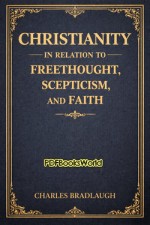
Charles Bradlaugh was an English political activist, author, journalist, and one of the most influential freethinkers of the nineteenth century. A passionate advocate for freedom of speech, secular government, and individual liberty, Bradlaugh devoted his life to encouraging open discussion on religion, politics, and social reform. His career was marked by both controversy and determination, as he challenged established conventions while defending the right of every individual to think and speak freely. His work Christianity in Relation to Freethought, Scepticism, and Faith reflects his commitment to examining religious questions through reasoned argument and public debate, making it an important historical document in the history of intellectual thought.
A Fearless Advocate for Free Expression
Born into modest circumstances in London, Charles Bradlaugh began working at a young age and educated himself through extensive reading and public discussion. His interest in philosophy, politics, and religion soon led him to become one of Britain's best-known public speakers. Bradlaugh believed that ideas should be examined through evidence and reason rather than accepted solely because of tradition or authority. This conviction shaped his writings and lectures, which addressed a wide range of subjects including civil liberties, parliamentary reform, education, and religious belief.
His public career often placed him at the center of national debate. After being elected to the British Parliament, Bradlaugh became involved in a lengthy legal and constitutional dispute over his right to affirm rather than swear a religious oath before taking his seat. His persistence eventually contributed to changes that allowed greater freedom of conscience for members of Parliament, reinforcing the principle that public service should not depend upon religious affiliation.
Reasoned Debate on Religion and Society
Throughout his life, Bradlaugh encouraged thoughtful discussion between people holding different beliefs. In Christianity in Relation to Freethought, Scepticism, and Faith, he examines questions concerning religion, belief, doubt, and philosophical inquiry from the perspective of a nineteenth-century freethinker. The book presents arguments intended to stimulate reflection rather than discourage discussion, illustrating the lively intellectual debates of Victorian Britain. Today, it is valued primarily as a historical work that helps readers understand the religious and philosophical conversations of its time, regardless of their own beliefs.
Notable Works
- Christianity in Relation to Freethought, Scepticism, and Faith – A thoughtful examination of religion, doubt, and intellectual inquiry from a freethought perspective.
- A Plea for Atheism – One of Bradlaugh's best-known works presenting philosophical arguments concerning belief and non-belief.
- The Impeachment of the House of Brunswick – A political critique discussing constitutional principles and public accountability.
- The Bible: What It Is! – A critical study examining the Bible from a historical and analytical viewpoint.
- The Freethinker's Text-Book – A collection of essays discussing philosophy, ethics, religion, and independent thought.
An Enduring Legacy
Charles Bradlaugh remains an important figure in the history of British political reform and intellectual freedom. Whether admired for his advocacy of civil liberties or studied for his role in nineteenth-century debates on religion and public life, his influence continues to be recognized by historians, legal scholars, and students of political thought. His writings preserve the spirit of open inquiry that characterized much of the Victorian era and encourage readers to appreciate the importance of respectful discussion across differing viewpoints. Visitors to PDF Books World can explore Bradlaugh's public domain works to gain insight into the historical development of freethought, civil liberties, and the enduring value of reasoned public debate.