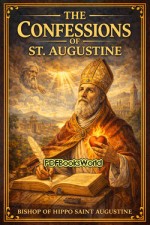
Aurelius Augustinus
Saint Augustine of Hippo, also known as Aurelius Augustinus, was an early Christian theologian, philosopher, bishop, and one of the most influential thinkers in Western history. Born in Tagaste, Roman North Africa, in 354 CE, Augustine underwent a remarkable intellectual and spiritual journey before converting to Christianity under the influence of Saint Ambrose. As Bishop of Hippo, he devoted his life to preaching, teaching, and writing, producing works that profoundly shaped Christian theology, philosophy, ethics, and the understanding of human nature. His ideas continue to influence religious thought, literature, and philosophy more than sixteen centuries after his death.
A Foundation for Christian Thought
Saint Augustine believed that faith and reason worked together in the pursuit of truth. His writings explored profound questions concerning God, free will, grace, sin, time, memory, and the purpose of human life, combining philosophical inquiry with deep spiritual reflection. Through clear reasoning and personal experience, he addressed both intellectual and moral challenges, creating works that remain central to Christian theology and the broader history of philosophy. His remarkable ability to unite classical learning with Christian doctrine established him as one of the greatest intellectual figures of the ancient world.
Confessions, Augustine's most celebrated work, is widely regarded as the first great spiritual autobiography in Western literature. Blending personal narrative with philosophical reflection and heartfelt prayer, it recounts his youthful struggles, dramatic conversion to Christianity, and lifelong search for truth. The book continues to inspire readers through its honesty, literary beauty, and timeless exploration of faith, self-discovery, and the human relationship with God.
Essential Works
- Confessions is Augustine's spiritual autobiography, chronicling his journey from youthful ambition to Christian faith while exploring memory, grace, and the search for truth.
- The City of God presents a monumental defense of Christianity, contrasting the temporal earthly city with the eternal City of God while examining history, politics, and divine providence.
- On Christian Doctrine provides guidance on interpreting Scripture and communicating Christian teaching with clarity and wisdom.
- On the Trinity explores the Christian doctrine of the Trinity through careful theological reasoning and philosophical reflection.
- On Free Choice of the Will examines free will, moral responsibility, and the origin of evil in one of Augustine's most influential philosophical dialogues.
An Enduring Legacy in Theology and Philosophy
Saint Augustine's writings continue to shape religious belief and philosophical inquiry through their extraordinary intellectual depth and spiritual insight. From Confessions and The City of God to On Christian Doctrine, On the Trinity, and On Free Choice of the Will, his works remain foundational texts in Christian theology and Western philosophy. His enduring legacy continues to inspire scholars, theologians, and readers seeking wisdom, faith, and a deeper understanding of the human condition.
If you enjoy theology, philosophy, Christian classics, and timeless reflections on faith and human nature, the writings of Saint Augustine of Hippo are well worth exploring. At PDFBooksWorld, you can discover a carefully curated collection of his enduring works and experience the profound insights of one of history's greatest Christian thinkers.