
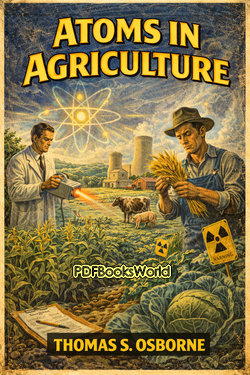
Atoms in Agriculture
by Thomas S. Osborne
Nuclear Science, Food Production, and the Scientific Transformation of Agriculture
Radiation laboratories, crop improvement, soil analysis, pest control, and scientific innovation come together in Atoms in Agriculture: Applications of Nuclear Science to Agriculture (Revised). The work explores how nuclear science and radioactive techniques became valuable tools in modern agriculture, helping researchers improve farming methods, study plant growth, protect crops, and increase food production.
The book reflects a period of strong optimism surrounding scientific progress and the peaceful applications of atomic research beyond military technology.
The Connection Between Nuclear Science and Farming
Although nuclear science is often associated with energy production or weapons, researchers discovered many agricultural uses for radioactive materials and atomic techniques.
The book explains how these methods helped scientists study biological processes with remarkable precision.
Radioisotopes could be used to trace nutrients through plants, examine soil conditions, and better understand crop development.
The invisible movement of materials inside living systems became easier to observe scientifically.
Applications in Agriculture
The work discusses several practical uses of nuclear science within farming and agricultural research.
- Studying soil fertility and nutrient absorption
- Improving crop varieties through mutation research
- Controlling harmful insects and agricultural pests
- Preserving food and reducing spoilage
These applications aimed to improve productivity, efficiency, and food security.
Science and the Modernization of Food Production
The book reflects the twentieth-century belief that scientific advancement could help solve global challenges involving hunger, population growth, and agricultural efficiency.
Researchers sought methods capable of increasing yields while reducing crop damage and improving resource management.
Nuclear techniques became part of broader efforts to modernize agriculture through chemistry, biology, and technological innovation.
The work presents science as practical tool for improving everyday life.
The Peaceful Uses of Atomic Research
Following the development of nuclear technology during World War II, many scientists and governments promoted peaceful applications of atomic research in medicine, industry, and agriculture.
Atoms in Agriculture belongs to this historical movement emphasizing constructive scientific use rather than military destruction.
The book therefore reflects both scientific curiosity and broader cultural optimism about technology.
The “atomic age” appeared capable of transforming many fields of human activity.
The Writing Style and Educational Purpose
The book is written in an explanatory and educational style intended to make scientific concepts understandable to readers interested in agriculture and applied science.
Technical information is balanced with practical examples showing how nuclear methods contributed to agricultural research and food production.
The tone remains informative, optimistic, and focused on scientific progress.
Why Atoms in Agriculture Still Holds Historical Interest
Atoms in Agriculture: Applications of Nuclear Science to Agriculture (Revised) remains historically fascinating because it documents a period when atomic science strongly influenced visions of technological progress and global development.
For readers interested in agricultural science, nuclear technology, food production, scientific history, and twentieth-century innovation, the book offers a revealing look at how atomic research extended into the fields and laboratories shaping modern agriculture.
Similar Genres
About the Author
Thomas S. Osborne was an American scientist, educator, and author whose writings reflected the growing relationship between scientific research and modern agriculture during the twentieth century. He believed that advances in science could improve farming practices, increase food production, and promote the responsible use of natural resources. Explore Thomas S. Osborne books to discover the author's life, literary career, and access notable works.