Alfred Russel Wallace
Alfred Russel Wallace was a British naturalist, explorer, geographer, anthropologist, and biologist whose pioneering research transformed the study of evolution and biogeography. Born in Wales in 1823, Wallace spent years exploring the Amazon rainforest and the islands of Southeast Asia, collecting thousands of plant and animal specimens while making observations that led him independently to the theory of evolution by natural selection. His groundbreaking work, presented alongside Charles Darwin's in 1858, established him as one of the founders of modern evolutionary biology. Wallace's extensive travels and scientific writings continue to inspire naturalists, historians, and readers fascinated by the diversity of life on Earth.
Exploring Nature Through Scientific Discovery
Alfred Russel Wallace believed that careful observation of the natural world revealed the processes shaping the evolution and distribution of living organisms. His writing combined scientific precision with vivid descriptions of tropical landscapes, indigenous cultures, and remarkable wildlife, making complex scientific ideas accessible to a broad audience. Through his travels, Wallace documented countless species while laying the foundations of modern biogeography, demonstrating how geography influences the evolution of plants and animals. His engaging narrative style continues to captivate readers interested in science, exploration, and natural history.
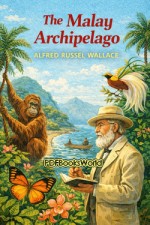
The Malay Archipelago is Wallace's masterpiece, recounting eight years of exploration across present-day Malaysia, Indonesia, and surrounding islands. Blending adventure, ethnography, and scientific observation, the book introduces readers to exotic wildlife, including orangutans and birds-of-paradise, while explaining the discoveries that led to the famous "Wallace Line," one of the most important concepts in biogeography. Widely regarded as one of the greatest travel narratives ever written, it remains a landmark in both scientific and exploration literature.
An Enduring Legacy in Natural History
Alfred Russel Wallace's writings continue to educate and inspire through their scientific insight, adventurous spirit, and deep appreciation of the natural world. The Malay Archipelago remains a timeless classic of travel and natural history, preserving firsthand accounts of extraordinary landscapes, diverse cultures, and remarkable biological discoveries. Wallace's enduring legacy continues to influence evolutionary biology, ecology, conservation, and the study of Earth's biodiversity.
If you enjoy natural history, scientific exploration, travel literature, and evolutionary science, the works of Alfred Russel Wallace are well worth exploring. At PDFBooksWorld, you can discover a carefully curated collection of his enduring writings and experience the observations of one of the greatest explorers and naturalists of the nineteenth century.