Journalism
The Journalism catalog offers an insightful collection of books dedicated to the principles, practices, and history of news reporting and media communication. Covering topics such as news writing, investigative reporting, editorial practices, media ethics, and public communication, the collection provides readers with a deeper understanding of how information is gathered, verified, and shared with society. These works serve as valuable resources for aspiring journalists, media professionals, students, and anyone interested in the role of journalism in public life.
Many titles focus on the fundamentals of journalistic practice, introducing readers to the techniques used to research, interview, verify facts, and construct compelling news stories. Through practical guidance and professional insights, these books help readers understand the importance of accuracy, clarity, and objectivity in reporting. They demonstrate how journalists transform complex events into accessible information that informs the public and encourages civic engagement. The collection highlights the significance of truthful and responsible reporting in maintaining an informed society.
The catalog also explores the history and evolution of journalism across different periods and media formats. Readers can examine how newspapers, magazines, radio, television, and digital platforms have influenced the way information is communicated. These works reveal how journalism has adapted to technological change while continuing to fulfill its essential role of documenting events and providing public accountability. Such studies offer valuable perspectives on the changing relationship between media, technology, and society.
Another notable feature of the collection is its attention to media ethics and professional responsibility. Many books examine issues such as press freedom, journalistic integrity, source protection, bias, and the social responsibilities of news organizations. Readers gain insight into the challenges journalists face when balancing the public's right to know with ethical considerations and professional standards. The collection emphasizes the importance of credibility, transparency, and ethical decision-making in effective journalism.
The Journalism catalog appeals to students, educators, writers, reporters, media researchers, and lifelong learners interested in understanding the world of news and communication. Its blend of practical instruction, historical analysis, and ethical discussion makes it a valuable resource for both professional development and academic study.
Overall, the Journalism catalog serves as a gateway to the study of news, media, and public communication. By bringing together works on reporting techniques, media history, investigative journalism, and journalistic ethics, the collection encourages readers to explore the vital role of journalism in society. It highlights the enduring importance of accurate information, critical inquiry, and responsible communication in supporting informed communities and democratic discourse.
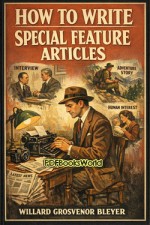
How To Write Special Feature Articles
Willard Grosvenor Bleyer