
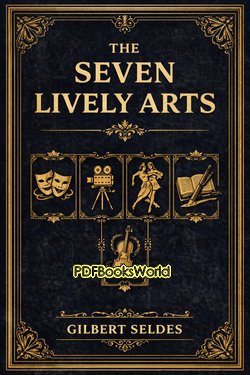
The Seven Lively Arts
by Gilbert Seldes
A Celebrated Defense of Popular Culture and Creative Expression
The Seven Lively Arts by Gilbert Seldes is a groundbreaking work of cultural criticism that challenged traditional distinctions between "high" and "popular" art. First published in the 1920s, the book argues that some of the most vibrant and influential forms of artistic expression can be found not only in museums and concert halls but also in newspapers, comic strips, films, popular music, and other forms of mass entertainment. Seldes's lively and provocative analysis helped reshape discussions about culture and artistic value.
Redefining What Counts as Art
At a time when many critics dismissed popular entertainment as unworthy of serious attention, Seldes took a different view. He believed that creativity, originality, and artistic excellence could flourish in widely accessible forms of entertainment just as readily as in traditional fine arts.
His work encouraged readers to judge artistic achievements on their merits rather than on preconceived ideas about cultural status.
The Seven "Lively Arts"
The book explores several forms of popular culture that Seldes considered especially dynamic and influential. These artistic expressions reflected the energy and creativity of modern society while reaching audiences on a scale previously unimaginable.
- Motion Pictures: The emerging art of cinema and its storytelling possibilities.
- Comic Strips: Visual narratives that combined humor, art, and social observation.
- Popular Music: Forms of music enjoyed by broad audiences.
- Vaudeville: Variety entertainment that showcased diverse talents.
- Mass Media: Cultural forms distributed through newspapers and other popular channels.
Gilbert Seldes as a Cultural Critic
Gilbert Seldes was one of the earliest critics to take popular culture seriously as a subject worthy of intellectual discussion. His writing is energetic, accessible, and often enthusiastic, reflecting his belief that criticism should engage directly with contemporary life rather than remain confined to established traditions.
By examining forms of entertainment often overlooked by scholars, he expanded the scope of cultural criticism.
The Relationship Between Art and Society
One of the book's central arguments is that artistic expression cannot be separated from the society that produces it. Popular entertainment reflects the interests, values, and experiences of ordinary people, making it an important part of cultural history.
Seldes demonstrates how these lively arts influence public imagination while also responding to social and technological change.
Ahead of Its Time
Many ideas presented in the book anticipated later developments in media studies and cultural criticism. Today, scholars routinely analyze films, comics, television, and other forms of popular culture, but such approaches were far less common when Seldes wrote.
His willingness to take popular entertainment seriously helped pave the way for future academic and critical discussions.
Why the Book Remains Relevant
Modern debates about the value of popular culture continue to echo many of the questions raised by Seldes. As new forms of media emerge, readers and critics still consider how entertainment shapes society and how artistic merit should be evaluated.
The book remains valuable for its historical perspective as well as its enduring challenge to cultural assumptions.
A Landmark Work of Cultural Criticism
The Seven Lively Arts stands as one of the most influential examinations of popular culture in the twentieth century. Through its energetic defense of film, comics, music, and other forms of mass entertainment, Gilbert Seldes broadened the understanding of what art can be and where it can be found. The book continues to inspire readers interested in culture, media, criticism, and the creative expressions that shape everyday life.
Similar Genres
About the Author
Gilbert Seldes was an American writer, cultural critic, editor, and educator who helped redefine the way people thought about popular culture in the twentieth century. At a time when many critics focused only on traditional fine arts, Seldes argued that films, comic strips, radio, popular music, and other forms of mass entertainment also deserved serious attention. Explore Gilbert Seldes books to discover the author's life, literary career, and access notable works.