A. C. Gilbert
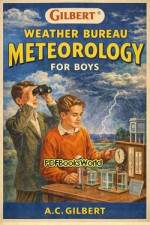
A. C. Gilbert, better known as Alfred Carlton Gilbert, was an American inventor, entrepreneur, athlete, and educator whose innovative educational toys inspired generations of young people to explore science, engineering, and practical skills. Best known as the creator of the famous Erector Set, Gilbert believed that learning should be interactive, imaginative, and enjoyable. Through his books, instructional manuals, and scientific kits, he encouraged children to develop curiosity by conducting experiments and building working models. Gilbert Weather Bureau (Meteorology) for Boys reflects his commitment to making scientific knowledge both entertaining and accessible for young learners.
Making Science Exciting for Young Minds
A. C. Gilbert devoted much of his career to transforming science education through hands-on learning. Rather than relying solely on textbooks, he encouraged children to discover scientific principles by observation, experimentation, and creative problem-solving. His educational products introduced countless young readers to subjects such as electricity, chemistry, astronomy, engineering, and meteorology, helping to inspire future scientists and inventors.
His writing style is practical, enthusiastic, and easy to understand. By presenting scientific concepts through simple explanations and engaging activities, Gilbert made learning both enjoyable and rewarding for beginners.
Introducing the Science of Weather
In Gilbert Weather Bureau (Meteorology) for Boys, Gilbert explains the fundamentals of weather observation and forecasting in language suited to young readers. The book introduces meteorological instruments such as thermometers, barometers, rain gauges, and wind vanes while describing how they are used to measure changing atmospheric conditions. Through practical demonstrations and observations, readers learn how weather patterns develop and how careful record-keeping contributes to understanding the natural world.
The book reflects the growing interest in scientific education during the early twentieth century, encouraging children to observe their surroundings with curiosity and precision. Its emphasis on learning by doing remains one of its most enduring strengths.
Popular Works
- Gilbert Weather Bureau (Meteorology) for Boys – An engaging introduction to weather observation and the basic principles of meteorology.
- Gilbert Chemistry Experiments – A practical guide introducing young readers to simple chemical experiments.
- Gilbert Electrical Experiments – An instructional manual exploring the fundamentals of electricity through hands-on activities.
- Gilbert Telescope and Astronomy Manual – A beginner's guide to observing the night sky and understanding astronomy.
- Gilbert Erector Manual – A construction guide encouraging creativity and engineering skills through model building.
His Contribution to Science Education
A. C. Gilbert made a lasting contribution to science education by demonstrating that practical experience is one of the most effective ways to learn. His educational books and scientific kits encouraged young people to experiment, observe carefully, and think critically about the physical world. His approach influenced generations of students by making science approachable, enjoyable, and relevant to everyday life.
His work also helped popularize STEM learning long before the term became widely used. By combining education with creativity and play, Gilbert inspired countless future engineers, inventors, and scientists.
An Enduring Legacy
A. C. Gilbert is remembered as one of the pioneers of educational toys and hands-on science instruction. His vision that children learn best through active discovery continues to influence educational methods around the world. His inventions and publications remain admired for encouraging curiosity, creativity, and lifelong learning.
Gilbert Weather Bureau (Meteorology) for Boys stands as an excellent example of A. C. Gilbert's dedication to inspiring scientific curiosity in young readers. PDF Books World carefully curates editions of his classic works, allowing modern readers to explore timeless introductions to weather science, practical observation, and the excitement of learning through discovery.