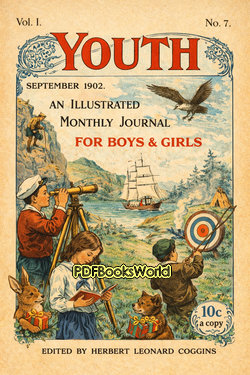
Youth, Vol. I, No. 7, September 1902
by Herbert Leonard Coggins
An Educational Magazine for Young Readers at the Dawn of the Twentieth Century
Youth, Vol. I, No. 7, September 1902, edited by Herbert Leonard Coggins, is an illustrated monthly magazine created for boys and girls. Published by the Penn Publishing Company of Philadelphia, the issue combines history, nature study, fiction, poetry, puzzles, and practical activities, reflecting the educational ideals of the early twentieth century. Its pages were designed to entertain young readers while encouraging curiosity, learning, and good character.
The magazine offers a fascinating glimpse into what young people were reading more than a century ago. Through a mixture of serialized stories, historical articles, and observations of the natural world, it sought to broaden knowledge while maintaining an engaging and accessible style.
A Diverse Collection of Reading
The September 1902 issue features a wide variety of content. Readers could learn about William Penn and early Philadelphia in "The Penn Cottage," follow serialized adventures such as "With Washington at Valley Forge" and "A Daughter of the Forest," and explore the natural sciences through articles on plants, birds, and wildlife.
This combination of fact and fiction made the magazine appealing to a broad audience and encouraged readers to develop interests in history, literature, and nature.
History Brought to Life
Historical subjects play an important role throughout the issue. Articles about colonial America and the Revolutionary era were intended to make the nation's past vivid and meaningful for younger generations. Rather than presenting history as a collection of dates and events, the magazine emphasized stories and personalities that could capture a child's imagination.
Nature and Scientific Curiosity
The publication also reflects the era's enthusiasm for natural history. Features on the Florida Everglades, bird life, and plant studies encouraged readers to observe the world around them and develop an appreciation for science. Such articles helped make learning enjoyable while fostering curiosity about the environment.
Highlights of the Issue
- Historical Articles: Features on William Penn and American history.
- Serialized Fiction: Continuing adventures and family stories.
- Nature Studies: Articles on plants, birds, and outdoor exploration.
- Poetry and Literature: Creative works for young readers.
- Puzzles and Activities: Interactive content designed to educate and entertain.
Major Themes
- Education: Learning through enjoyable reading.
- Curiosity: Encouraging exploration of the world.
- Patriotism: Interest in national history and heritage.
- Nature Appreciation: Understanding plants and animals.
- Character Development: Promoting positive values and habits.
Why the Magazine Remains Interesting
Youth, Vol. I, No. 7, September 1902 remains valuable as a snapshot of childhood reading in the early 1900s. Its pages reveal the educational priorities, interests, and literary tastes of the period while preserving stories and articles that entertained young readers more than a century ago. The issue stands as both a historical document and an engaging example of classic juvenile publishing.
Similar Genres
About the Author
Herbert Leonard Coggins was an American editor, publisher, and writer best known for his contributions to children's periodical literature during the early twentieth century. As editor of illustrated magazines created for boys and girls, Coggins helped produce entertaining and educational publications that combined adventure stories, poetry, puzzles, historical articles, and practical knowledge. Explore Herbert Leonard Coggins books to discover the author's life, literary career, and access notable works, including Young Folks Magazine, Vol. I, No. 1, March 1902, Young Folks Magazine, Vol. I, No. 2, April 1902 , and more.