
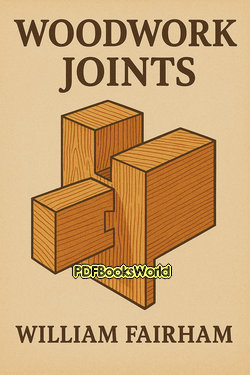
Woodwork Joints
by William Fairham
Why Woodwork Joints Remains Essential for Woodworking Enthusiasts
Woodwork Joints by William Fairham continues to be valued by carpenters, furniture makers, and woodworking beginners because of its practical and detailed approach to craftsmanship. The book explains how different joints are used in woodworking and why strong construction matters in both simple and advanced projects. Even though the work was written many years ago, its lessons remain highly useful for modern readers interested in traditional woodworking techniques.
Readers interested in the history and development of woodworking craftsmanship can explore Encyclopaedia Britannica.
The Importance of Strong Wood Joints
One of the central ideas of the book is that the strength and durability of wooden furniture depend heavily on the quality of its joints. Rather than relying only on nails or glue, traditional woodworking uses carefully shaped joints that hold pieces of wood together securely and elegantly.
Fairham explains how each joint serves a different purpose depending on the project. Some joints are designed for strength, while others focus on appearance, flexibility, or ease of construction. This practical approach makes the book valuable for readers who want to understand both the theory and craft behind woodworking.
A Guide for Beginners and Skilled Craftsmen
Although the book contains technical information, the writing remains clear and accessible. Fairham carefully describes how joints are constructed and where they should be used. The explanations are supported by diagrams that help readers visualize the structure and function of each design.
Because of this straightforward style, the book appeals to both beginners learning basic woodworking skills and experienced craftsmen interested in traditional methods.
Readers looking for woodworking study resources and historical craftsmanship techniques can visit Popular Woodworking.
Traditional Techniques That Still Matter
Many of the woodworking methods discussed in the book continue to be used today despite advances in modern tools and machinery. Traditional joints such as dovetails, mortise-and-tenon joints, and lap joints remain respected because of their durability and precision.
The book also reflects a time when craftsmanship required patience, accuracy, and deep understanding of materials. Readers often appreciate the attention to detail and the emphasis on developing practical skill through careful work.
The Beauty of Handcrafted Construction
Beyond technical instruction, Woodwork Joints highlights the artistic side of woodworking. Well-made joints are not only functional but visually appealing. Fine furniture makers often treat joints as part of the design itself, creating pieces that combine strength with beauty.
This balance between engineering and artistry continues to attract readers interested in handmade furniture and traditional craftsmanship.
Why Modern Readers Still Enjoy the Book
Modern interest in handmade furniture, home workshops, and traditional crafts has introduced new audiences to older woodworking books like Fairham’s work. Many readers enjoy learning techniques that were developed long before modern mass production became common.
The book also appeals to people interested in practical hobbies and creative skills. Woodworking offers a hands-on experience that many find relaxing, rewarding, and deeply satisfying.
A Lasting Legacy in Craftsmanship
More than a technical manual, Woodwork Joints represents a tradition of careful craftsmanship and skilled manual work. Its practical lessons, detailed explanations, and respect for quality construction continue to inspire woodworkers around the world. Whether used as a learning guide or historical reference, the book remains an enduring resource for anyone interested in the art of woodworking.
Similar Genres
About the Author
William Fairham was a British technical writer, educator, and authority on practical woodworking whose instructional books helped generations of craftsmen, apprentices, and hobbyists develop essential woodworking skills. Writing during the early twentieth century, he specialized in producing clear and practical manuals that explained workshop techniques with precision and simplicity. Explore William Fairham books to discover the author's life, literary career, and access notable works.