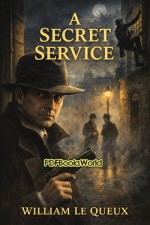
William Le Queux
William Le Queux was a British journalist, novelist, and travel writer who became one of the most popular authors of espionage and adventure fiction during the late nineteenth and early twentieth centuries. Renowned for his fast-paced plots and imaginative stories of international intrigue, he captivated readers with tales of secret agents, political conspiracies, and hidden dangers. His novels reflected the atmosphere of growing international tensions before the First World War, combining suspense with contemporary political concerns. A Secret Service: Being Strange Tales of a Nihilist showcases his mastery of thrilling narratives filled with mystery, espionage, and dramatic twists.
A Master of Early Spy Fiction
William Le Queux helped establish many of the conventions that later became central to modern espionage fiction. Drawing on his experience as a journalist and his extensive travels across Europe, he created stories that blended realistic settings with imaginative plots involving intelligence agents, secret organizations, and international diplomacy. His ability to maintain suspense while weaving together political intrigue made him one of the leading popular novelists of his era.
His writing style is direct, energetic, and richly descriptive, allowing readers to follow complex conspiracies without losing sight of the human drama at their center. This accessible approach contributed greatly to his widespread popularity.
Suspense Inspired by Contemporary Events
Le Queux often drew inspiration from the political climate of his time, when rival European powers competed for influence and concerns about espionage captured the public imagination. His novels explore themes of loyalty, patriotism, deception, and hidden identities, creating stories in which danger frequently lurks beneath ordinary appearances.
Although fictional, his works reflect the anxieties and uncertainties of the years leading up to the twentieth century's major international conflicts. This historical background adds an additional layer of interest for readers exploring both literature and history.
Popular Works
- A Secret Service: Being Strange Tales of a Nihilist – A collection of suspenseful stories featuring espionage, political intrigue, and secret revolutionary movements.
- The Invasion of 1910 – A famous speculative novel imagining a foreign invasion of Britain.
- The Great War in England in 1897 – An early work of military fiction exploring the possibility of conflict on British soil.
- The Czar's Spy – A gripping espionage novel set amid international political intrigue.
- Spies of the Kaiser – A thriller examining intelligence networks and pre-war European tensions.
His Contribution to Popular Fiction
William Le Queux played an important role in the development of modern spy fiction by combining political intrigue with compelling storytelling. His novels influenced later generations of espionage writers and helped establish many of the themes that continue to define the genre, including undercover operations, coded messages, international conspiracies, and the constant tension between secrecy and public life.
His books also serve as valuable historical reflections of the fears and political atmosphere of their time. Readers today can appreciate both their literary excitement and the insight they provide into public attitudes during a period of international uncertainty.
An Enduring Legacy
William Le Queux remains one of the pioneering figures in the history of espionage fiction. Although later writers expanded and refined the genre, his imaginative storytelling and ability to transform contemporary political concerns into gripping adventures secured his place in literary history. His novels continue to appeal to readers who enjoy classic thrillers, historical mysteries, and tales of international intrigue.
A Secret Service: Being Strange Tales of a Nihilist stands as a memorable example of William Le Queux's talent for suspense and adventure. PDF Books World carefully curates editions of his classic works, allowing modern readers to rediscover the excitement, mystery, and enduring appeal of one of Britain's earliest masters of spy fiction.