William Henry Babcock
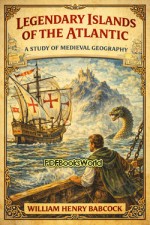
William Henry Babcock was an American geographer, historian, cartographer, and author whose scholarly research focused on exploration, historical geography, and the evolution of early maps. Fascinated by the ways medieval and Renaissance explorers understood the world, Babcock devoted much of his career to investigating the legends, voyages, and geographical traditions that influenced the discovery of distant lands. His meticulous studies combined historical documents, ancient maps, travel narratives, and archaeological evidence to separate myth from historical fact. His book Legendary Islands of the Atlantic: A Study of Medieval Geography remains one of his most significant works, offering an insightful examination of the mysterious islands that appeared on medieval maps and in early European literature.
A Scholar of Exploration and Historical Geography
William Henry Babcock believed that maps and travel accounts were more than simple records of geography. They revealed how earlier civilizations understood the world, interpreted unfamiliar landscapes, and imagined places beyond the limits of known exploration. His research brought together evidence from history, literature, navigation, and cartography, enabling readers to understand why certain islands appeared repeatedly on medieval charts despite their uncertain existence. His careful scholarship earned respect among historians and geographers interested in the history of exploration.
Rather than dismissing ancient legends as mere fiction, Babcock examined them critically, asking whether they might contain traces of genuine voyages, misunderstood observations, or cultural traditions preserved over centuries. This balanced approach allowed him to explore fascinating historical questions while maintaining a commitment to careful evidence and reasoned analysis.
Tracing the Myths of the Atlantic
In Legendary Islands of the Atlantic: A Study of Medieval Geography, Babcock investigates famous islands such as Atlantis, Antillia, Saint Brendan's Isle, Hy-Brasil, and other legendary lands that occupied an important place in medieval geographical thought. He explains how these stories developed, how they influenced mapmakers, and why explorers continued searching for such places long after their origins became uncertain. By comparing historical texts with navigational records and surviving maps, he provides readers with a deeper understanding of how myth, religion, and exploration became closely connected during the Middle Ages.
Writing with Clarity and Scholarly Precision
Babcock's writing combines academic rigor with an engaging narrative style that makes complex historical subjects accessible to general readers. He carefully explains the evidence supporting different theories while avoiding unnecessary technical language. His ability to weave together history, geography, folklore, and exploration creates a fascinating account that appeals to readers interested in medieval history, cartography, maritime exploration, and the development of geographical knowledge. His balanced presentation encourages readers to appreciate both the imagination of medieval mapmakers and the scientific methods used to evaluate historical evidence.
Notable Works
- Legendary Islands of the Atlantic: A Study of Medieval Geography – A comprehensive examination of the mythical islands that appeared on medieval maps and influenced early exploration.
- The Early Norse Visits to North America – A historical study exploring Viking voyages and their possible presence in the North Atlantic.
- American Explorers Before Columbus – Investigates theories and historical evidence concerning pre-Columbian exploration of the Americas.
- Works on Historical Cartography and Exploration – Scholarly studies examining the history of maps, navigation, and geographical discovery.
An Enduring Legacy
William Henry Babcock is remembered as an accomplished historian and geographer whose research illuminated the fascinating relationship between mythology, exploration, and the development of geographical knowledge. His careful examination of medieval maps and travel traditions continues to assist historians, cartographers, and students of exploration in understanding how earlier generations perceived the world. By combining rigorous scholarship with engaging storytelling, he transformed obscure historical sources into compelling narratives about humanity's enduring desire to explore the unknown. Visitors to PDF Books World can explore Babcock's public domain writings to discover thoughtful studies that reveal how legend, history, and geography together shaped the age of exploration and the expanding map of the world.