William Balck
William Balck was a distinguished German military officer, strategist, and military historian whose writings became influential studies of tactics and battlefield organization during the late nineteenth and early twentieth centuries. Drawing upon extensive military experience and careful analysis of European warfare, Balck developed practical manuals that examined the principles of command, infantry operations, and battlefield maneuver. His works were widely studied by military officers and military academies, earning him recognition as one of Germany's leading authorities on tactical doctrine. Through his clear explanations and systematic approach, Balck helped shape professional military education during a period of rapid technological and organizational change.
Serving in the Imperial German Army, Balck witnessed an era when modern weapons, improved communications, and changing battlefield conditions required armies to rethink traditional methods of warfare. He believed that successful military leadership depended not only on discipline and courage but also on careful planning, adaptability, and a thorough understanding of tactical principles. His writings reflected these convictions, combining practical experience with analytical study.
Advancing Military Education
Balck devoted much of his career to explaining military tactics in a logical and accessible manner. Rather than presenting isolated rules, he examined how infantry, cavalry, artillery, terrain, and leadership interacted during military operations. His books encouraged officers to think critically, evaluate changing circumstances, and apply tactical principles with sound judgment rather than relying solely on fixed procedures.
This educational approach made his works valuable beyond Germany. Military professionals in several countries studied his writings to better understand the evolving nature of modern warfare and the importance of flexible command.
A Systematic Approach to Tactics
One of Balck's greatest strengths was his ability to organize complex military subjects into clear and practical lessons. He emphasized preparation, reconnaissance, coordination, and disciplined leadership while demonstrating how successful operations depended upon cooperation between different branches of the armed forces. His discussions drew upon historical campaigns as well as contemporary military practice, making his books useful for both theoretical study and professional instruction.
Although military doctrine has continued to evolve, many of the leadership principles discussed in his works remain relevant to the study of military history and command.
A Classic Study of Infantry Operations
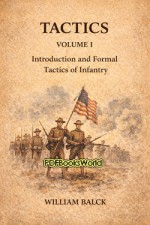
Among Balck's most influential publications is Tactics, Volume 1 (of 2): Introduction and Formal Tactics of Infantry, a comprehensive examination of infantry organization, battlefield formations, command principles, and tactical movement. The book explains the foundations of military operations while emphasizing discipline, training, leadership, and effective coordination in combat. It became an important reference for professional officers and military students seeking a systematic understanding of tactical doctrine during a transformative period in military history.
Notable Works
- Tactics, Volume 1 (of 2): Introduction and Formal Tactics of Infantry – A detailed study of infantry organization and tactical principles.
- Tactics, Volume 2 (of 2): The Operations of Combined Arms – An examination of coordinated military operations involving multiple combat arms.
- Modern Military Thought – Essays discussing military leadership and battlefield organization.
- Studies in Military History – Historical analyses of campaigns and tactical development.
- Military Instruction and Leadership – Writings emphasizing officer education and command responsibility.
An Enduring Legacy in Military Thought
William Balck is remembered as one of the leading military theorists of his generation. His careful analysis of tactics, leadership, and battlefield organization contributed significantly to professional military education during a period of profound change in warfare. Although technology and doctrine have advanced considerably since his lifetime, his emphasis on disciplined leadership, thoughtful planning, and tactical flexibility continues to interest historians, military scholars, and readers studying the evolution of military science. His works remain valuable historical references for understanding the development of modern tactical thinking.
Readers visiting PDF Books World can explore the works of William Balck and discover authoritative studies on military tactics, leadership, and battlefield organization that continue to illuminate the history and development of professional military strategy.