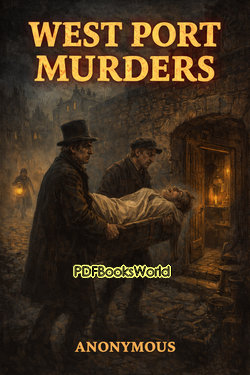
West Port Murders
by Anonymous
A Chilling Crime That Captivated Public Attention
West Port Murders recounts one of the most notorious criminal cases associated with nineteenth-century Britain. Combining elements of true crime, social history, and criminal investigation, the work explores a series of shocking murders that attracted widespread public interest and raised serious questions about crime, poverty, and justice. The narrative provides readers with insight into both the crimes themselves and the society in which they occurred.
Like many crime accounts of the period, the book seeks not only to describe dramatic events but also to examine the circumstances that allowed such crimes to take place. Through its detailed treatment of the case, it offers a fascinating glimpse into historical attitudes toward law enforcement, punishment, and public morality.
The Historical Setting
The story unfolds during a period of rapid social and economic change. Growing cities brought new opportunities, but they also created challenges related to overcrowding, poverty, and public safety. In such environments, criminal activity often attracted significant attention from both authorities and the public.
The West Port district, with its crowded streets and complex social conditions, provides the backdrop for a case that shocked contemporary observers. The setting plays an important role in helping readers understand the broader context of the events described.
The Investigation and Its Challenges
One of the most compelling aspects of the narrative is its account of the investigation. Detecting crime in the nineteenth century was often far more difficult than it is today. Investigators lacked many of the scientific techniques and forensic tools that modern law enforcement agencies rely upon.
As a result, solving serious crimes frequently depended upon witness testimony, careful observation, and persistence. The book illustrates the methods used by authorities as they attempted to uncover the truth and bring those responsible to justice.
Major Themes Found Throughout the Work
- Crime and Justice: The effort to investigate wrongdoing and hold offenders accountable.
- Social Conditions: The influence of poverty and urban life on criminal activity.
- Public Morality: Society's reaction to shocking crimes.
- Historical Investigation: The methods used to solve crimes before modern forensic science.
These themes transform the book into more than a simple crime narrative, giving it broader historical significance.
The Public Fascination with True Crime
Cases involving unusual or shocking crimes have long attracted public attention. The West Port murders became a subject of widespread discussion because they combined mystery, violence, and social concerns. Newspapers, pamphlets, and books helped spread information about the case, making it one of the most talked-about criminal episodes of its time.
The book reflects this public fascination while also encouraging readers to consider the deeper issues connected to the crimes.
A Window into Nineteenth-Century Society
Beyond its criminal narrative, the work serves as a historical document. It reveals how people understood crime, punishment, and social responsibility during the nineteenth century. Readers gain insight into legal practices, public attitudes, and the challenges faced by communities struggling with rapid urban growth.
This broader perspective makes the book valuable not only to crime enthusiasts but also to those interested in social and cultural history.
Why Readers Continue to Find the Book Interesting
- Historical True Crime: A detailed account of a notorious criminal case.
- Social Insight: Exploration of the conditions surrounding the crimes.
- Investigative Narrative: The process of uncovering the truth.
- Cultural Significance: A reflection of nineteenth-century attitudes and concerns.
These qualities help the work remain engaging long after the events themselves have passed into history.
Why West Port Murders Remains Worth Reading
West Port Murders offers readers a compelling combination of true crime and historical analysis. Through its examination of a notorious case, the book explores themes of justice, social conditions, and public reaction to criminal behavior. Its value lies not only in recounting dramatic events but also in helping modern readers understand the society in which those events occurred. As a result, it remains an informative and thought-provoking work for anyone interested in crime history and nineteenth-century life.