
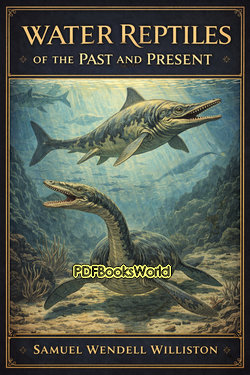
Water Reptiles of the Past and Present
by Samuel Wendell Williston
Exploring the Ancient Giants That Once Ruled the Waters
Water Reptiles of the Past and Present by Samuel Wendell Williston is a fascinating scientific work that examines some of the most remarkable reptiles to inhabit rivers, lakes, and oceans throughout Earth's history. Written by a respected paleontologist and natural scientist, the book bridges the gap between prehistoric discoveries and living species, helping readers understand how aquatic reptiles evolved and adapted to life in the water.
Through a combination of scientific observation, fossil evidence, and biological study, Williston presents an engaging account of creatures that have captured human curiosity for generations. From massive marine reptiles that swam ancient seas to modern species that continue to inhabit aquatic environments, the book offers a broad perspective on one of nature's most intriguing groups of animals.
A Journey Through Millions of Years
The history of water-dwelling reptiles stretches back to some of the earliest chapters of life on Earth. Over countless generations, different species developed unique features that allowed them to thrive in aquatic habitats. Some became swift hunters, while others evolved specialized bodies suited for deep-water movement.
Williston guides readers through this long evolutionary story, explaining how environmental changes and natural adaptation influenced the development of these animals. The book reveals how fossil discoveries have helped scientists reconstruct ancient ecosystems and understand the creatures that once lived within them.
The World of Ancient Marine Reptiles
Predators of Prehistoric Oceans
Among the most exciting sections of the book are those devoted to extinct marine reptiles. These animals were not dinosaurs, yet many reached impressive sizes and occupied important roles within prehistoric food chains. Their fossils provide valuable clues about life in ancient oceans.
Williston discusses how scientists study skeletal remains to learn about movement, feeding habits, and behavior. These discoveries help paint a vivid picture of oceans that existed long before the appearance of modern marine life.
Important Topics Covered in the Book
- Fossil Evidence: How preserved remains reveal information about extinct species.
- Evolutionary Adaptations: Physical changes that allowed reptiles to succeed in aquatic environments.
- Ancient Marine Ecosystems: The habitats where prehistoric reptiles lived and hunted.
- Living Water Reptiles: Comparisons between extinct species and modern aquatic reptiles.
These topics provide readers with a comprehensive introduction to both paleontology and reptile biology.
Connecting Ancient and Modern Species
Lessons from Living Reptiles
While much of the book focuses on extinct creatures, Williston also examines living reptiles that spend much of their lives in water. Crocodilians, turtles, and other aquatic species help scientists better understand how reptiles function in aquatic environments.
By comparing modern animals with fossil specimens, researchers can make informed interpretations about the behavior and lifestyles of prehistoric species. This connection between past and present is one of the book's most valuable contributions.
The Scientific Value of Fossil Discoveries
- Understanding Evolution: Fossils reveal how species change over long periods of time.
- Reconstructing Ecosystems: Ancient remains help scientists study prehistoric environments.
- Comparative Biology: Modern animals provide clues about extinct relatives.
- Expanding Knowledge: Each discovery adds to humanity's understanding of natural history.
These insights demonstrate why paleontology remains an important field of scientific research.
Samuel Wendell Williston's Contribution to Science
A Pioneer in Paleontological Research
Samuel Wendell Williston was widely respected for his work in paleontology and comparative anatomy. His research helped improve scientific understanding of prehistoric life, particularly marine reptiles and other extinct vertebrates. He possessed a talent for explaining complex scientific concepts in a way that educated both specialists and general readers.
His writings reflect a deep appreciation for evidence-based inquiry and the excitement of scientific discovery.
Why Water Reptiles of the Past and Present Still Matters
Water Reptiles of the Past and Present remains an engaging exploration of aquatic reptiles across geological time. Through fossil evidence, evolutionary insights, and comparisons with living species, Samuel Wendell Williston offers readers a clearer understanding of how these remarkable animals adapted and survived. The book stands as both a valuable scientific resource and a fascinating introduction to some of the most extraordinary creatures ever to inhabit Earth's waters.
Similar Genres
About the Author
Samuel Wendell Williston was an American paleontologist, anatomist, entomologist, and educator whose research made significant contributions to the study of prehistoric life and vertebrate evolution. Throughout his distinguished career, he investigated fossil reptiles, ancient mammals, and insects while also teaching anatomy and comparative biology at leading universities. Explore Samuel Wendell Williston books to discover the author's life, literary career, and access notable works.