
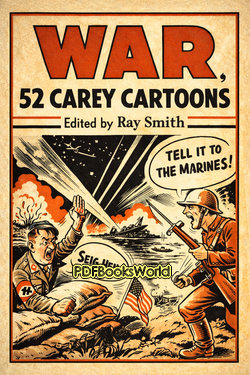
War, 52 Carey Cartoons
by Ray Smith
A Visual Chronicle of World War I Through Political Satire
War, 52 Carey Cartoons by Ray Smith is a collection of political cartoons created during the First World War. Published in 1915, the volume gathers fifty-two illustrations that use humor, symbolism, and sharp visual commentary to examine the major events, personalities, and political issues of the conflict. Rather than presenting history through lengthy essays, Smith communicates ideas through memorable images that capture the public mood of the era.
The collection serves as both an artistic work and a historical document. Each cartoon reflects contemporary opinions and concerns, allowing modern readers to see how people interpreted the war while it was still unfolding. Through satire and visual storytelling, the book reveals the power of cartoons to influence public discussion and shape political understanding.
The Role of Political Cartoons
Political cartoons occupy a unique place in journalism and public life. A single image can summarize complex events, criticize leaders, and express popular sentiments more quickly than pages of written commentary. During wartime, cartoonists often became important voices in shaping how citizens viewed international developments.
Ray Smith's illustrations demonstrate how visual satire could make political issues accessible to a broad audience while encouraging readers to think critically about current events.
A Window into the First World War
The cartoons were produced during the early years of World War I, when uncertainty surrounded the outcome of the conflict. They address military campaigns, diplomatic tensions, national rivalries, and the shifting balance of power among the world's leading nations.
Viewed today, the illustrations offer a valuable snapshot of wartime attitudes and provide insight into how contemporary observers understood the conflict.
Major Themes Found Throughout the Collection
- War and Diplomacy: Commentary on military and political developments.
- National Identity: Symbolic portrayals of countries and their leaders.
- Satire: The use of humor to critique events and policies.
- Public Opinion: Reflections of contemporary attitudes toward the war.
These themes make the collection useful for both historical and artistic study.
Symbolism and Visual Storytelling
Many political cartoons rely on familiar symbols to communicate ideas quickly. Nations are often represented by recognizable figures, animals, or objects, allowing readers to understand the message at a glance. Smith uses these techniques effectively, combining symbolism with exaggeration and humor to create memorable commentary.
The result is a collection that remains engaging even for readers unfamiliar with every historical detail.
Art as Historical Evidence
Political cartoons provide evidence that differs from official government documents or military reports. They reveal emotions, prejudices, hopes, and fears that were present within society at the time. Historians often study such material because it offers insight into public perception and cultural attitudes.
War, 52 Carey Cartoons preserves these perspectives in a vivid and accessible form.
The Lasting Appeal of Wartime Satire
Although the specific events depicted belong to a particular historical moment, the collection demonstrates the enduring role of satire in political discourse. Cartoonists continue to use humor and visual symbolism to comment on contemporary affairs, making the book an interesting example of a tradition that remains alive today.
Its combination of art, history, and commentary gives it value beyond the period in which it was created.
Why Readers Continue to Appreciate the Book
- Historical Insight: Contemporary reactions to World War I.
- Visual Commentary: Complex issues expressed through powerful imagery.
- Artistic Interest: Examples of early twentieth-century political cartooning.
- Cultural Value: A record of public opinion during wartime.
Why War, 52 Carey Cartoons Remains Worth Reading
War, 52 Carey Cartoons offers a fascinating perspective on World War I through the lens of political satire. By combining humor, symbolism, and social commentary, Ray Smith created a collection that captures the atmosphere of a world at war. The volume remains valuable for readers interested in history, journalism, illustration, and the enduring influence of political cartoons on public debate.
Similar Genres
About the Author
Ray Smith was an illustrator and cartoonist whose work demonstrated the unique ability of visual art to comment on political events, public opinion, and everyday life. Through carefully crafted cartoons, he transformed complex national and international issues into memorable images that could be understood at a glance. Explore Ray Smith books to discover the author's life, literary career, and access notable works.