
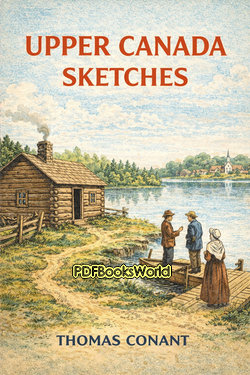
Upper Canada Sketches
by Thomas Conant
Pioneer Life and Early Settlement in Nineteenth-Century Canada
Upper Canada Sketches by Thomas Conant is a historical and descriptive work portraying life in Upper Canada during the early nineteenth century. Through personal observation, anecdote, and historical reflection, Conant records the experiences of settlers, frontier communities, and developing towns while preserving valuable insight into the social and cultural growth of early Canadian society.
The book presents Upper Canada not as an untouched wilderness alone, but as a changing region shaped by migration, hard labor, political development, and community life.
Life on the Canadian Frontier
Conant describes the challenges faced by settlers attempting to establish homes and livelihoods within forests, isolated villages, and rough frontier landscapes. Farming, transportation, harsh winters, and limited resources created daily difficulties requiring resilience and cooperation.
At the same time, the work emphasizes the opportunities available within expanding settlements where new communities slowly emerged through determination and shared effort. Conant records local customs, public events, and memorable personalities, giving the narrative a lively and personal atmosphere.
Rather than focusing only upon political history, the book highlights ordinary experiences and social conditions shaping everyday life in early Canada.
Settlement and National Growth
A major theme throughout the book is the transformation of wilderness into organized society. Conant repeatedly explores how roads, farms, schools, churches, and local institutions gradually established stability within frontier regions.
The work also reflects pride in Canadian development and interest in preserving memories of earlier pioneer generations before modernization altered the landscape permanently.
At the same time, the narrative reveals the hardships and uncertainties connected with colonial expansion and frontier existence.
This mixture of history and personal recollection gives the book lasting documentary value.
Historical Themes Explored Throughout the Book
- Pioneer Settlement: Families and communities struggle to establish life in frontier regions.
- Rural and Frontier Hardship: Isolation, climate, and labor shape daily experience.
- Community and Cooperation: Settlers depend upon shared effort and local relationships.
- Growth of Canadian Society: Villages and institutions gradually develop into organized communities.
- Historical Memory: The book preserves stories and experiences from early Canadian history.
Thomas Conant’s Descriptive Historical Style
Upper Canada Sketches demonstrates Thomas Conant’s conversational and observational writing style. His prose remains clear, anecdotal, and strongly focused upon preserving details of people, places, and frontier customs.
Conant consistently presents history through lived experience rather than abstract political discussion alone.
Why the Book Still Holds Historical Interest
Modern readers continue finding Upper Canada Sketches valuable because it preserves vivid descriptions of pioneer life and early Canadian settlement during an important period of national development. The work also offers insight into frontier culture, colonial society, and the experiences of ordinary settlers.
Its themes of perseverance, community, migration, and social change continue appealing to readers interested in Canadian history, pioneer narratives, rural life, and nineteenth-century historical literature.
Similar Genres
About the Author
Thomas Conant was a Canadian historian, lawyer, journalist, and author whose writings preserved the history, traditions, and everyday experiences of early Canada. Deeply interested in the country's colonial past, Conant documented the lives of settlers, the development of communities, and the events that shaped Upper Canada during its formative years. Explore Thomas Conant books to discover the author's life, literary career, and access notable works.