
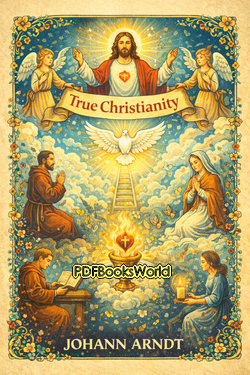
True Christianity
by Johann Arndt
Inner Renewal, Spiritual Devotion, and the Living Practice of Christianity
True Christianity by Johann Arndt is one of the most influential devotional works in Lutheran spiritual literature. Written during the late sixteenth and early seventeenth centuries, the book emphasizes inward spiritual transformation, sincere faith, repentance, humility, and the imitation of Christ rather than mere outward religious formality. Arndt sought to renew Christian life by encouraging believers to cultivate genuine spiritual devotion and moral renewal within the heart.
The work became deeply influential within Lutheran Pietism and broader Protestant spirituality because of its focus upon personal holiness and the practical experience of faith.
The Meaning of Genuine Christian Life
The book argues that true Christianity involves more than intellectual belief or participation in religious ceremonies. Arndt repeatedly explains that authentic faith must transform the inner character, guiding thoughts, actions, desires, and relationships.
He emphasizes repentance, self-examination, prayer, humility, patience, charity, and spiritual discipline as signs of genuine Christian life.
Rather than treating religion as external obedience alone, the work presents Christianity as a living spiritual relationship with God expressed through inward renewal and moral conduct.
The volume reflects a period when many religious thinkers worried that doctrinal disputes and institutional conflicts had weakened personal devotion and spiritual sincerity.
Its tone combines scriptural reflection with devotional warmth and moral instruction.
The Imitation of Christ and Spiritual Transformation
A major theme throughout the book is that believers should strive to imitate the life, humility, compassion, and obedience of Jesus Christ.
Arndt repeatedly emphasizes that Christians are called not only to believe correct doctrine, but also to embody Christlike love and virtue in daily life.
The work also reflects mystical and devotional influences that stress inward communion with God and spiritual purification.
This emphasis upon practical holiness and inward spirituality strongly influenced later Protestant devotional movements.
Religious and Spiritual Themes Explored Throughout the Book
- Inner Spiritual Renewal: Arndt explains Christianity as transformation of the heart and soul.
- Repentance and Humility: Genuine faith involves self-examination, moral growth, and dependence upon divine grace.
- The Imitation of Christ: Believers are encouraged to follow Christ’s example of compassion and obedience.
- Prayer and Devotional Life: Spiritual discipline and communion with God remain central throughout the work.
- Faith Expressed Through Action: True belief naturally produces kindness, patience, and moral conduct.
The book became one of the foundational devotional texts of Protestant spirituality and Pietism.
The Difference Between Outward Religion and Living Faith
One of the work’s strongest ideas is that outward religious identity alone cannot substitute for inward spiritual transformation.
Arndt repeatedly warns against hypocrisy, pride, empty ritualism, and purely intellectual religion lacking genuine love and humility.
The book also demonstrates how spiritual renewal begins with repentance and continual dependence upon God’s grace.
This focus on inward devotion gave the work enduring spiritual influence across many Christian traditions.
Johann Arndt’s Devotional and Reflective Style
True Christianity demonstrates Johann Arndt’s remarkable ability to combine biblical teaching, spiritual reflection, and practical moral guidance into emotionally powerful devotional writing.
The prose remains meditative, compassionate, and strongly focused upon encouraging sincere Christian living rather than abstract theological debate alone.
Arndt consistently presents faith as something meant to transform both the inner soul and outward conduct.
Why the Book Still Holds Religious and Historical Importance
Modern readers continue finding True Christianity spiritually important because it emphasizes personal devotion, moral renewal, and heartfelt faith in accessible and emotionally compelling language.
The book also provides insight into early modern Protestant spirituality and the devotional movements that influenced later Pietism and evangelical Christianity.
Its themes of repentance, humility, prayer, compassion, and spiritual transformation continue resonating with readers seeking reflective and practical religious guidance.
For readers interested in Christianity, devotional literature, Protestant spirituality, Pietism, religious history, mystical theology, and practical faith, this work remains spiritually influential, morally thoughtful, and historically enduring.
Similar Genres
About the Author
Johann Arndt was a German Lutheran theologian, pastor, and devotional writer whose works profoundly influenced Protestant spirituality across Europe. He believed that genuine Christian faith should be expressed through inner transformation, sincere devotion, and a life shaped by love, humility, and obedience to God. Explore Johann Arndt books to discover the author's life, literary career, and access notable works.