
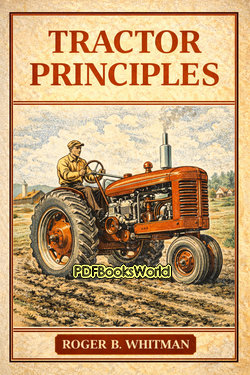
Tractor Principles
by Roger B. Whitman
Understanding the Machines That Transformed Agriculture
Tractor Principles by Roger B. Whitman is a practical and educational guide that explains the operation, construction, and mechanical principles of agricultural tractors. Written during a period when mechanization was rapidly changing farming practices, the book was intended to help farmers, mechanics, and students understand the technology that was revolutionizing agricultural production.
Rather than focusing solely on specific tractor models, Whitman examines the underlying principles that govern tractor performance. By understanding these fundamentals, readers can better operate, maintain, and evaluate agricultural machinery.
The Rise of the Agricultural Tractor
The introduction of tractors marked one of the most significant developments in modern farming. Replacing much of the labor previously performed by animals and manual effort, tractors increased efficiency, expanded productivity, and enabled farmers to cultivate larger areas of land.
Whitman's book reflects the growing importance of agricultural engineering during the early twentieth century and helps readers appreciate the impact of mechanization on rural life.
How Tractors Work
A tractor combines several mechanical systems that work together to generate power and perform agricultural tasks. Engines produce energy, transmissions control speed and torque, and traction systems transfer power to the ground. Understanding these relationships is essential for effective operation and maintenance.
The book explains these concepts in a clear and systematic manner, making technical information accessible to practical users.
Major Themes Found Throughout the Book
- Mechanical Engineering: Understanding the systems that power tractors.
- Agricultural Efficiency: Improving farm productivity through machinery.
- Maintenance: Keeping equipment in reliable operating condition.
- Technical Education: Learning the principles behind machine performance.
These themes make the book valuable for both historical and practical study.
Power, Traction, and Performance
One of the book's key concerns is the efficient use of power. Tractor performance depends not only on engine strength but also on traction, weight distribution, and mechanical design. Whitman discusses how these factors influence a machine's ability to perform agricultural work under varying conditions.
Such knowledge helps operators use machinery more effectively and economically.
Maintenance and Reliability
Regular maintenance is essential for extending the life of agricultural equipment. The book emphasizes inspection, lubrication, adjustment, and repair practices that help prevent breakdowns and maintain efficiency.
By understanding the principles behind mechanical systems, operators can identify problems more quickly and make informed decisions about repairs.
A Snapshot of Agricultural Technology
Tractor Principles also serves as a historical record of agricultural technology during a transformative era. Readers can observe how engineers approached machinery design and how farmers adapted to new methods of cultivation.
The work provides valuable insight into the technological changes that reshaped agriculture in the twentieth century.
Why Readers Continue to Appreciate the Book
- Technical Clarity: Clear explanations of tractor mechanics.
- Historical Value: Insight into early agricultural mechanization.
- Practical Knowledge: Guidance on operation and maintenance.
- Educational Focus: Emphasis on understanding mechanical principles.
Why Tractor Principles Remains Worth Reading
Tractor Principles is an informative guide that explains the technology behind one of agriculture's most important inventions. Through its detailed examination of engines, power transmission, traction, and maintenance, Roger B. Whitman helps readers understand how tractors transformed farming and continue to play a vital role in agricultural production. The book remains valuable for students of agricultural history, engineering, and farm machinery.
Similar Genres
About the Author
Roger B. Whitman was an American engineer, technical writer, and educator whose publications made mechanical knowledge accessible to farmers, students, and equipment operators. Writing during a period when agricultural machinery was transforming farming practices, Whitman specialized in explaining complex engineering principles through clear language and practical examples. Explore Roger B. Whitman books to discover the author's life, literary career, and access notable works.