Thomas S. Gardiner
Thomas S. Gardiner was a science fiction writer whose work reflects the imaginative spirit of the classic pulp magazine era. Although little is known about his personal life, his surviving fiction demonstrates the curiosity and optimism that characterized early speculative literature. Writing during a period when readers eagerly embraced stories of distant planets, cosmic mysteries, and scientific discovery, Gardiner contributed to a genre that encouraged people to imagine humanity's place in an immense and largely unexplored universe. His storytelling combined adventurous plots with thought-provoking ideas, preserving the sense of wonder that made early science fiction so enduring.
Like many writers of his generation, Gardiner explored the possibilities opened by scientific progress while recognizing that the greatest challenges often arose from human choices rather than technology alone. His stories examined courage, responsibility, perseverance, and the consequences of confronting forces beyond ordinary experience. These themes gave his work a timeless quality that continues to appeal to readers of classic speculative fiction.
Writing During the Golden Age of Imagination
The early decades of the twentieth century witnessed tremendous public fascination with astronomy, physics, aviation, and the possibility of space travel. Science fiction authors transformed these interests into exciting adventures that carried readers beyond the limits of contemporary knowledge. Gardiner was part of this creative movement, producing fiction that encouraged readers to imagine new worlds, unfamiliar civilizations, and extraordinary scientific discoveries.
His writing style favored clear storytelling, imaginative settings, and steadily building suspense. Rather than overwhelming readers with technical detail, he focused on creating believable characters whose intelligence, determination, and resilience allowed them to confront remarkable situations. This balance between adventure and speculation became one of the defining qualities of classic pulp science fiction.
Exploring Humanity's Place in the Universe
Gardiner's fiction reflects a fascination with the vastness of space and the mysteries that lie beyond Earth. His stories invite readers to consider how individuals might respond when faced with events on a cosmic scale, where familiar assumptions no longer apply. Through imaginative scenarios, he explored ideas about destiny, sacrifice, discovery, and the fragile position of humanity within an immense universe.
These themes continue to resonate because they combine exciting adventure with questions that remain relevant today. By placing ordinary people in extraordinary circumstances, Gardiner demonstrated that courage, cooperation, and thoughtful judgment are as important as scientific knowledge when confronting the unknown.
A Vision of Cosmic Drama
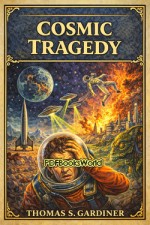
Among Gardiner's known works is Cosmic Tragedy, a science fiction story that blends large-scale scientific speculation with human emotion and suspense. Rather than focusing solely on futuristic technology, the narrative examines how individuals respond when confronted by events of overwhelming magnitude. The story illustrates Gardiner's ability to transform grand cosmic ideas into an engaging adventure while preserving the excitement and imagination that define classic science fiction.
An Enduring Contribution to Classic Science Fiction
Although Thomas S. Gardiner remains a relatively obscure figure, his work represents an important part of the rich tradition of early speculative fiction. Stories such as his continue to remind readers of a time when science fiction encouraged boundless curiosity about the universe and inspired generations to dream about exploration, discovery, and humanity's future among the stars. His writing preserves the adventurous spirit of the pulp era while celebrating imagination as one of humanity's greatest strengths.
Readers visiting PDF Books World can explore the work of Thomas S. Gardiner and discover a classic science fiction adventure that captures the wonder of cosmic exploration, the excitement of speculative storytelling, and the enduring appeal of imagining what lies beyond the known universe.