
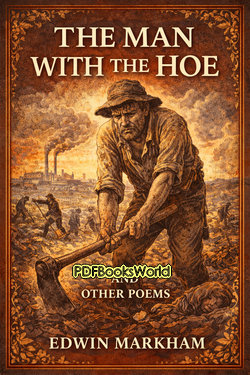
The man with the hoe, and other poems
by Edwin Markham
Poetry of Social Justice, Humanity, and Hope
The Man with the Hoe, and Other Poems by Edwin Markham is a powerful collection of poetry that examines the dignity of labor, social inequality, and the enduring strength of the human spirit. First published in the late nineteenth century, the volume brought Markham widespread recognition, particularly through its title poem, which became one of the most discussed works of social protest poetry in American literature.
The collection reflects Markham's concern for ordinary people whose lives were shaped by hard work, poverty, and limited opportunities. Through vivid imagery and emotional language, he urges readers to consider the conditions faced by workers and to recognize the humanity of those often overlooked by society.
The Famous Title Poem
The centerpiece of the collection is "The Man with the Hoe", inspired by a painting by French artist Jean-François Millet. The poem portrays a laborer bent over his work, worn down by years of physical toil. Markham uses this image to raise questions about social justice, economic inequality, and the responsibilities of society.
The poem quickly attracted attention because it addressed issues that were increasingly important during an era of industrial growth and social change. Its emotional appeal helped make it one of the most influential poems of its time.
A Voice for the Common Worker
Many poems in the collection focus on ordinary individuals rather than political leaders or famous figures. Markham believed that the experiences of workers, farmers, and laborers deserved recognition and respect.
His poetry emphasizes compassion and understanding, encouraging readers to look beyond social divisions and appreciate the shared humanity of all people.
Key Features of the Collection
- Social Commentary: Reflections on inequality and human dignity.
- Accessible Language: Poetry designed for a broad audience.
- Emotional Power: Strong imagery and heartfelt expression.
- Humanitarian Concerns: Sympathy for the struggles of ordinary people.
- Moral Reflection: Questions about justice and responsibility.
Major Themes
- Dignity of Labor: Recognition of the value of honest work.
- Social Justice: Concern for fairness and equality.
- Human Worth: Every individual deserves respect and opportunity.
- Compassion: Understanding the struggles of others.
- Hope: Belief in the possibility of a better future.
Markham's Poetic Style
Edwin Markham wrote in a direct and accessible style that allowed his poems to reach a wide audience. Rather than relying on complex symbolism, he often used vivid images and straightforward language to communicate his ideas. This approach helped readers connect emotionally with the subjects of his poems.
His work combines artistic expression with a strong sense of moral purpose, making the collection both literary and socially significant.
Why the Collection Remains Relevant
The Man with the Hoe, and Other Poems continues to resonate because many of the issues it addresses remain important today. Questions about work, economic opportunity, social responsibility, and human dignity continue to shape public discussion around the world.
For readers interested in American poetry, social history, and literature that engages with issues of justice and compassion, the collection offers a meaningful and thought-provoking experience. Markham's poems remind us that literature can both reflect society and encourage readers to imagine a more humane future.
About the Author
Edwin Markham was an American poet, educator, lecturer, and social reformer whose powerful verse gave voice to the dignity, struggles, and aspirations of ordinary people. One of the most widely read poets of his era, Markham gained international recognition for his humanitarian outlook and his ability to blend lyrical expression with social conscience. Explore Edwin Markham books to discover the author's life, literary career, and access notable works.