
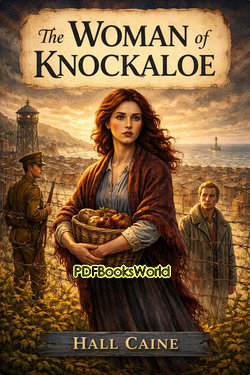
The Woman of Knockaloe: A Parable
by Hall Caine
A Powerful Plea for Humanity in a World Divided by War
The Woman of Knockaloe: A Parable by Hall Caine is a moving novel that blends romance, tragedy, and social commentary against the backdrop of the First World War. Set on the Isle of Man near the historic Knockaloe internment camp, the story examines the lives of ordinary people whose relationships are shaped by fear, prejudice, and the pressures of wartime society. Through an emotional and deeply human narrative, Caine explores themes of compassion, forgiveness, and the dangers of judging people solely by their nationality or background.
Unlike many war novels that focus on military campaigns and battlefield heroics, this work directs attention to the civilian experience. It reveals how conflict affects families, communities, and personal relationships, showing that the consequences of war extend far beyond the front lines.
A Story of Love and Understanding
At the center of the novel is a young woman whose life changes when she encounters a foreign internee held at the nearby camp. Raised in an environment shaped by patriotic feeling and suspicion toward those considered enemies, she initially accepts the attitudes common in her community. However, personal experience gradually challenges these beliefs.
As she comes to know the internee as an individual rather than a symbol of a foreign nation, she begins to question the prejudices surrounding her. Their growing relationship becomes the emotional heart of the story, illustrating how genuine human connections can transcend social and political barriers.
The Significance of Knockaloe
The setting plays a vital role in the novel. Knockaloe was one of the largest internment camps in the British Isles during World War I, housing thousands of civilian detainees. The camp serves as more than a historical backdrop; it becomes a symbol of division and isolation.
The fences and boundaries that separate the internees from the outside world mirror the emotional and social barriers that exist within society. Through this setting, Caine explores how fear can lead communities to create divisions that are difficult to overcome.
Main Characters
- The Young Woman: A compassionate individual whose beliefs evolve throughout the story.
- The Internee: A man whose humanity challenges common stereotypes and assumptions.
- Family Members: Relatives whose opinions reflect the tensions of wartime society.
- Community Figures: People influenced by patriotism, fear, and public opinion.
- Camp Residents: Individuals whose lives have been disrupted by global events.
Themes of Compassion and Reconciliation
One of the novel's strongest themes is the importance of understanding others as individuals. Caine argues that prejudice often grows when people stop seeing the humanity in those who appear different from themselves. Through the experiences of his characters, he demonstrates how empathy can break down barriers created by fear and misunderstanding.
The story also explores forgiveness and reconciliation. Rather than encouraging resentment, it suggests that healing becomes possible when people choose compassion over hostility. This message gives the novel a moral depth that extends beyond its historical setting.
Major Themes in the Novel
- Love: Personal relationships can overcome social divisions.
- Humanity: Individuals should be judged by character rather than nationality.
- Prejudice: Fear and misunderstanding can lead to injustice.
- Forgiveness: Reconciliation offers a path toward healing.
- The Impact of War: Conflict affects entire communities, not just soldiers.
Hall Caine's Vision
Hall Caine was one of the most widely read novelists of his era, known for combining dramatic storytelling with social and moral concerns. In this novel, he uses a personal story to address larger questions about society and human behavior. His writing encourages readers to consider the consequences of intolerance and the value of compassion.
The emotional power of the narrative comes from its focus on ordinary people caught in extraordinary circumstances. By emphasizing individual experiences, Caine makes broad social issues feel immediate and personal.
Why the Novel Remains Relevant
The Woman of Knockaloe: A Parable continues to resonate because its themes remain universal. Questions about prejudice, national identity, tolerance, and understanding continue to shape societies around the world. The novel reminds readers that fear can create divisions, but empathy has the power to bridge them.
For readers interested in historical fiction, wartime narratives, and stories that explore the complexities of human relationships, this novel offers both emotional depth and thoughtful reflection. Its message of compassion and shared humanity remains as meaningful today as when it was first published.
Similar Genres
About the Author
Hall Caine, born Sir Thomas Henry Hall Caine, was a British novelist, playwright, and public lecturer whose emotionally powerful stories made him one of the most widely read authors of the late nineteenth and early twentieth centuries. Explore Hall Caine books to discover the author's life, literary career, and access notable works.