
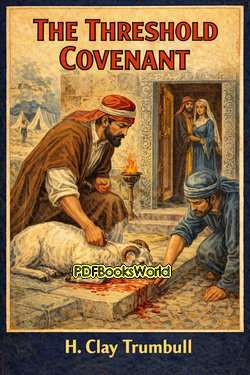
The Threshold Covenant
by H. Clay Trumbull
Exploring the Ancient Origins of Sacred Rituals
The Threshold Covenant; or, The Beginning of Religious Rites by H. Clay Trumbull is a fascinating study of ancient customs, beliefs, and religious practices connected to the idea of the threshold. Rather than focusing on a single religion, the book examines how many cultures throughout history treated doorways and entrances as sacred spaces filled with symbolic meaning.
H. Clay Trumbull combines historical research, anthropology, and religious interpretation to explore how early societies developed rituals connected to homes, temples, family life, and spiritual protection. The result is a thoughtful work that investigates how simple everyday actions eventually became important religious traditions.
The Symbolic Meaning of the Threshold
One of the central ideas in the book is that the threshold was often viewed as more than a physical entrance. In many ancient cultures, crossing a doorway represented transition, protection, or spiritual connection.
Trumbull explains that people believed important moments in life were linked to entering or leaving sacred spaces. Because of this belief, rituals connected to thresholds became common in homes, religious buildings, and ceremonial events.
- Doorways seen as symbols of transition
- Thresholds connected to protection and blessing
- Sacred customs surrounding entry into homes
- Religious meaning attached to household spaces
The author argues that many later religious ceremonies may have developed from these early symbolic practices.
Ancient Customs Across Different Cultures
The book draws examples from a wide variety of civilizations and historical periods. Trumbull studies traditions from the Middle East, Europe, Asia, and other regions to show how similar ideas appeared across different societies.
Readers are introduced to customs involving marriage ceremonies, sacrifices, family rituals, and protective practices performed near entrances or gateways. The comparisons between cultures help demonstrate how deeply rooted these symbolic ideas were in human history.
Although the details of each tradition vary, the book suggests that many societies shared similar beliefs about sacred boundaries and spiritual protection.
Themes and Ideas Found Throughout the Book
- The connection between religion and everyday life
- The symbolic importance of boundaries and entrances
- The development of rituals from ancient customs
- The influence of cultural traditions on religious practice
- The shared spiritual ideas found across civilizations
These themes give the book both historical and philosophical depth. Rather than simply listing old customs, Trumbull attempts to explain why human societies created rituals and how those practices influenced later religious traditions.
A Blend of History, Religion, and Anthropology
One reason the book remains interesting is its combination of multiple fields of study. Trumbull approaches the subject not only as a religious writer but also as a researcher interested in human behavior and cultural development.
The writing reflects nineteenth-century scholarship, where authors often attempted to connect historical traditions with larger spiritual ideas. Readers may notice that some interpretations belong strongly to the intellectual style of the period in which the book was written.
Even so, the work remains valuable for readers interested in comparative religion, mythology, and cultural history.
Why the Book Still Attracts Curious Readers
The Threshold Covenant continues to interest readers because it explores how ordinary actions and household customs became connected to spiritual meaning. The book encourages readers to think about how symbols and rituals shape human culture across generations.
Fans of religious history, anthropology, and ancient traditions may especially appreciate the book’s detailed observations and wide cultural scope. H. Clay Trumbull presents a unique perspective on the origins of ritual practices that still influence societies today.
By examining the sacred meaning attached to simple thresholds and entrances, the book reveals how deeply symbolism and belief have always been connected to everyday human life.
Similar Genres
About the Author
H. Clay Trumbull was an American clergyman, biblical scholar, editor, educator, and author whose writings made important contributions to the study of the Bible, ancient customs, and Christian history. Throughout his career, he sought to explain the historical and cultural background of Scripture in ways that were both accurate and accessible. Explore H. Clay Trumbull books to discover the author's life, literary career, and access notable works.