
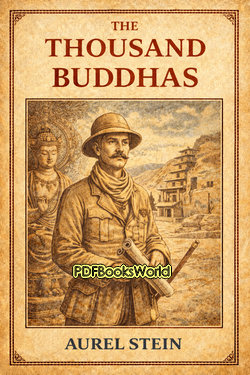
The Thousand Buddhas
by Sir Aurel Stein
Discovering Ancient Treasures Along the Silk Road
The Thousand Buddhas by Sir Aurel Stein is a fascinating account of exploration, archaeology, and cultural discovery in Central Asia. Written by one of the most renowned explorers of the early twentieth century, the book chronicles Stein's investigations of the famous cave temples near Dunhuang, a historic oasis city located along the Silk Road. Through vivid descriptions and detailed observations, he introduces readers to a remarkable collection of Buddhist art, manuscripts, and historical artifacts that had remained hidden for centuries.
The work combines travel writing, historical research, and archaeological reporting, offering a unique glimpse into one of the world's most significant cultural heritage sites. It remains an important record of discoveries that helped expand global understanding of Asian history and religion.
The Mystery of the Thousand Buddhas
The title refers to the celebrated cave temples often known as the Caves of the Thousand Buddhas. Carved into cliffs along important trade routes, these caves contain magnificent murals, sculptures, and religious treasures created over many centuries. They served as places of worship, meditation, and artistic expression for generations of Buddhist communities.
When Stein visited the site, he encountered a treasure trove of historical material that provided valuable insights into the cultural exchanges that took place along the Silk Road. The discoveries revealed connections between China, India, Central Asia, and other regions linked through trade and travel.
A Journey Through the Silk Road
One of the book's most engaging aspects is its portrayal of exploration in remote and often challenging environments. Stein traveled across deserts, mountains, and ancient caravan routes in search of historical evidence. His journeys required determination, careful planning, and a deep interest in the civilizations that once flourished across Central Asia.
Through these travels, readers gain an appreciation for the vast networks that connected distant cultures long before the modern era. The Silk Road emerges not only as a trade route but also as a pathway for ideas, religions, technologies, and artistic traditions.
Important Discoveries Discussed in the Book
- Buddhist Murals: Elaborate paintings depicting religious themes and historical scenes.
- Ancient Manuscripts: Documents that shed light on language, religion, and daily life.
- Religious Artifacts: Sculptures and objects connected to Buddhist practice.
- Historical Records: Materials that reveal cultural exchanges across Asia.
These discoveries helped scholars better understand the development of Buddhism and the history of the Silk Road.
The Cultural Importance of Dunhuang
Dunhuang occupied a strategic position at the crossroads of several major trade routes. Travelers, merchants, pilgrims, and diplomats passed through the region for centuries, bringing with them ideas and traditions from different parts of the world. As a result, the area became a meeting point of cultures and beliefs.
Stein's findings highlight this remarkable cultural diversity. The artworks and manuscripts preserved within the caves demonstrate how different influences merged to create a rich and distinctive heritage.
Sir Aurel Stein's Contribution to Archaeology
Sir Aurel Stein was among the most influential explorers and archaeologists of his generation. His expeditions across Central Asia uncovered important historical sites and brought international attention to regions that had received little scholarly study. Through careful documentation and research, he helped preserve knowledge of cultures that might otherwise have remained unknown to much of the world.
His work also encouraged further archaeological investigations and expanded interest in the history of the Silk Road.
Major Themes Found Throughout the Book
- Exploration: The pursuit of knowledge through travel and discovery.
- Cultural Exchange: The movement of ideas across regions and civilizations.
- Religious Heritage: The role of Buddhism in shaping art and culture.
- Historical Preservation: Protecting and studying the achievements of the past.
Why The Thousand Buddhas Remains Important
The Thousand Buddhas continues to be valued as both an adventure narrative and a historical record. Through his exploration of the cave temples and Silk Road heritage, Sir Aurel Stein introduced readers to one of the most extraordinary cultural discoveries of the modern era. The book remains an engaging resource for those interested in archaeology, Asian history, Buddhism, and the enduring legacy of ancient civilizations.
Similar Genres
About the Author
Sir Aurel Stein was a Hungarian-born British archaeologist, explorer, geographer, and scholar whose expeditions across Central Asia transformed the study of the ancient Silk Road. Renowned for his meticulous fieldwork and extraordinary endurance, he uncovered forgotten cities, manuscripts, artworks, and archaeological treasures that revealed the rich cultural exchanges between East and West. Explore Sir Aurel Stein books to discover the author's life, literary career, and access notable works.