The Servile State
by Hilaire Belloc
Industrial Society, Economic Dependence, and the Loss of Human Freedom
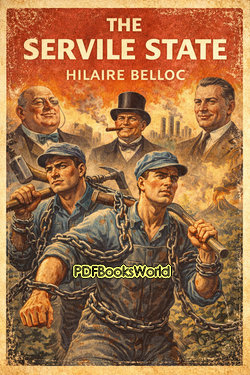
The Servile State by Hilaire Belloc is a powerful political and economic critique examining the dangers of modern industrial capitalism and the growing dependence of individuals upon centralized economic systems. Written in the early twentieth century, the book argues that modern society risks creating a “servile state” in which ordinary people lose genuine economic independence and become increasingly controlled by employers, institutions, and government authority.
Belloc presents economic freedom as essential to human dignity and warns that societies may gradually surrender liberty while believing themselves modern and progressive.
The Meaning of the Servile State
Belloc defines the servile state as a social system where large portions of the population depend economically upon powerful institutions while lacking meaningful ownership of productive property. In such a society, individuals may retain formal political rights yet remain economically constrained and vulnerable.
The book argues that both unrestrained capitalism and excessive state control risk creating conditions resembling servitude. Wealth becomes concentrated among a small group while ordinary workers increasingly rely upon wages, regulation, and institutional support for survival.
Rather than defending either socialism or industrial capitalism completely, Belloc advocates broader property ownership and economic independence for ordinary families.
Property, Freedom, and Social Stability
A major theme throughout the book is the relationship between private property and personal liberty. Belloc repeatedly argues that widespread ownership of land, tools, and productive resources creates healthier and more stable societies than systems dominated by concentrated wealth or centralized authority.
The work also reflects Catholic social teaching and distributist economic ideas emphasizing local ownership, family stability, and moral responsibility within economic life.
At the same time, Belloc criticizes industrial systems that reduce human beings to dependent laborers without meaningful control over their own economic futures.
This combination of economic analysis and moral philosophy gives the work lasting intellectual significance.
Political and Economic Themes Explored Throughout the Book
- Economic Dependence and Freedom: Loss of property ownership weakens personal liberty.
- Criticism of Industrial Capitalism: Wealth concentration creates social inequality and insecurity.
- The Growth of State Control: Regulation and dependency may gradually limit freedom.
- Distributism and Small Ownership: Broad property ownership supports stable communities.
- Morality and Economics: Economic systems influence human dignity and social ethics.
Hilaire Belloc’s Argumentative Style
The Servile State demonstrates Hilaire Belloc’s forceful and intellectually rigorous prose style. His writing remains direct, analytical, and often provocative while combining historical reflection with economic criticism and moral concern.
Belloc consistently presents economic structure as inseparable from questions of justice, liberty, and human well-being.
Why the Book Still Holds Intellectual Importance
Modern readers continue finding The Servile State highly relevant because its themes of economic inequality, corporate power, labor dependence, and government control remain central to political and economic debate today. The book also stands as one of the major early twentieth-century critiques of industrial economic systems from a distributist perspective.
Its themes of freedom, property ownership, labor, political economy, and social responsibility continue appealing to readers interested in economics, political philosophy, Catholic social thought, and critiques of modern industrial society.
Similar Genres
About the Author
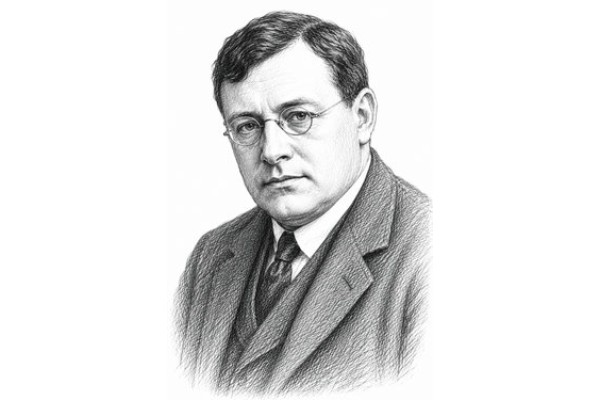
Hilaire Belloc was a prolific Anglo-French writer whose remarkable literary career embraced history, poetry, essays, travel writing, biography, and children's literature. Born in France in 1870 and later becoming a British citizen, Belloc combined a sharp intellect with an engaging writing style that appealed to both general readers and scholars. Explore Hilaire Belloc books to discover the author's life, literary career, and access notable works, including Cautionary Tales for Children, The Road, Lambkin's Remains, Mr. Clutterbuck's Election , and more.