
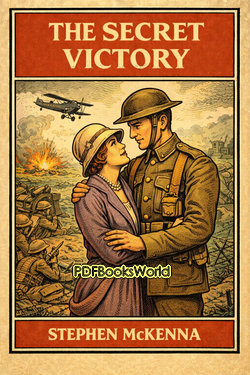
The Secret Victory
by Stephen McKenna
War, Disillusionment, and Emotional Survival After the Collapse of Idealism
The end of war does not always bring peace. In The Secret Victory by Stephen McKenna, the emotional and psychological aftermath of World War I becomes just as important as the conflict itself. The novel examines how individuals struggle to rebuild meaning, relationships, and personal identity after experiencing violence, trauma, and shattered expectations during one of history’s most devastating wars.
Rather than presenting simple patriotic triumph, the story explores the quieter and more complicated forms of survival that continue long after the battlefield falls silent.
A Generation Changed by War
The characters emerge from wartime experience emotionally altered and uncertain about the society waiting for them afterward.
Old assumptions about honor, stability, morality, and progress no longer feel secure. Relationships become strained by memory, emotional distance, and unspoken suffering.
McKenna portrays a society attempting to return to normal life while still haunted by the psychological scars of conflict.
The true struggle often takes place internally rather than publicly.
The Meaning Behind the “Secret Victory”
The title suggests a form of triumph invisible to the outside world. Victory here may involve endurance, emotional honesty, moral resilience, or the ability to preserve humanity despite suffering.
Instead of military conquest alone, the novel asks whether individuals can overcome despair, bitterness, and spiritual exhaustion after war.
This deeper emotional perspective distinguishes the story from more conventional wartime adventure narratives.
Themes Running Through the Novel
The story repeatedly returns to questions involving identity, morality, and emotional recovery.
- The psychological damage caused by war
- The difficulty of returning to ordinary life
- Disillusionment with social and political ideals
- The search for personal meaning after catastrophe
These themes reflect broader cultural anxieties present throughout postwar Europe.
The Postwar Mood of the Early Twentieth Century
Many writers after World War I struggled to describe a world permanently changed by industrialized violence and mass death.
Confidence in traditional institutions weakened, and literature increasingly focused on alienation, emotional fragmentation, and moral uncertainty.
The Secret Victory belongs to this wider literary atmosphere, examining how war reshapes private lives as much as nations.
The emotional consequences continue long after official victory celebrations end.
The Writing Style of Stephen McKenna
McKenna writes with seriousness, introspection, and psychological attention. Conversations and internal reflections carry much of the novel’s emotional weight.
The pacing allows readers to observe gradual emotional change rather than relying heavily on dramatic action.
The tone frequently feels thoughtful, restrained, and quietly melancholy.
Why The Secret Victory Still Resonates
The Secret Victory remains relevant because societies continue confronting the emotional aftermath of war and collective trauma. Questions involving recovery, identity, memory, and resilience remain deeply human concerns.
For readers interested in postwar literature, psychological fiction, World War I cultural history, and emotionally reflective novels, Stephen McKenna’s work offers a thoughtful exploration of survival beyond the battlefield.
Similar Genres
About the Author
Stephen McKenna was a British novelist whose thoughtful fiction explored the changing social and political landscape of the early twentieth century. He gained recognition for writing novels that combined engaging storytelling with careful observations of human character, public life, and the effects of historical events on ordinary people. Explore Stephen McKenna books to discover the author's life, literary career, and access notable works.