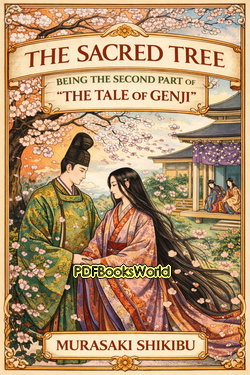
The Sacred Tree
by Murasaki Shikibu
A Classic Episode from Japan's Great Literary Tradition
The Sacred Tree by Murasaki Shikibu is a celebrated section of the monumental Japanese classic The Tale of Genji, often regarded as one of the world's earliest and greatest novels. Written in the early eleventh century during Japan's Heian period, the work reflects the refined court culture of the era while exploring themes of love, longing, duty, and human emotion. The chapter known as The Sacred Tree presents a significant moment in the life of Prince Genji, revealing the emotional and social complexities that define the larger narrative.
Murasaki Shikibu's writing is renowned for its psychological depth and sensitivity. Rather than focusing on action and adventure, she examines the inner lives of her characters, creating a nuanced portrait of relationships and courtly society.
The World of the Heian Court
The story unfolds within the elegant and highly structured world of the imperial court. Status, etiquette, and reputation play crucial roles in shaping personal relationships. Characters must carefully balance their emotions with the expectations of society, often leading to situations of emotional tension and uncertainty.
This setting provides a rich backdrop for the exploration of human feelings and social obligations.
The Significance of the Sacred Tree
In Japanese tradition, sacred trees are often associated with spirituality, reverence, and symbolic meaning. Within the chapter, the sacred tree serves as a powerful image connected to memory, longing, and emotional attachment.
Murasaki employs natural imagery with great skill, using elements of the landscape to reflect the thoughts and emotions of her characters. The sacred tree becomes more than a physical object; it functions as a symbol of enduring feelings and personal reflection.
Highlights of the Chapter
- Psychological Depth: Insight into the emotions and motivations of the characters.
- Courtly Society: A detailed portrayal of Heian-era aristocratic life.
- Literary Elegance: Refined prose and rich symbolism.
- Nature Imagery: Symbolic use of landscapes and natural elements.
- Emotional Complexity: Exploration of love, memory, and longing.
The Power of Emotion
A central feature of Murasaki Shikibu's work is her ability to depict subtle emotional experiences. Characters often struggle with conflicting desires, social obligations, and the passage of time. These internal conflicts give the story a timeless quality that continues to resonate with readers.
The chapter illustrates how memories and relationships can shape a person's life long after particular events have passed.
Major Themes
- Love: The joys and sorrows of human relationships.
- Memory: The lasting influence of past experiences.
- Impermanence: Awareness of change and the passage of time.
- Duty: Balancing personal feelings with social expectations.
- Nature: The symbolic connection between the natural world and human emotion.
Murasaki Shikibu's Literary Achievement
Murasaki Shikibu is widely regarded as one of the greatest writers in Japanese literature. Her ability to portray character, emotion, and social life with extraordinary subtlety has earned her lasting admiration around the world. The Tale of Genji continues to be studied as a masterpiece of narrative art and psychological realism.
The chapter The Sacred Tree exemplifies the qualities that have made her work enduringly influential.
Why the Chapter Remains Important
The Sacred Tree continues to attract readers because of its emotional richness and literary beauty. Its exploration of love, memory, and the passage of time transcends cultural and historical boundaries, making it meaningful even after a thousand years.
For readers interested in Japanese literature, world classics, and character-driven storytelling, the chapter offers an excellent introduction to the artistry of Murasaki Shikibu. Its graceful prose and profound understanding of human nature ensure its enduring significance in the history of literature.
Similar Genres
About the Author
Murasaki Shikibu was a Japanese novelist, poet, and lady-in-waiting at the imperial court during the Heian period, widely regarded as one of the greatest writers in world literature. Explore Murasaki Shikibu books to discover the author's life, literary career, and access notable works, including The Tale of Genji , and more.