
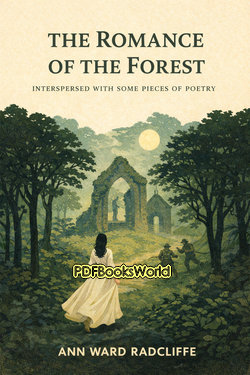
The Romance of the Forest, interspersed with some pieces of poetry
by Ann Ward Radcliffe
Gothic Mystery, Ruined Abbeys, and Hidden Secrets in the Dark Forest
The Romance of the Forest, interspersed with some pieces of poetry by Ann Ward Radcliffe is one of the foundational Gothic novels of the late eighteenth century, blending suspense, emotional intensity, romance, mystery, and poetic atmosphere within a world of ruined abbeys, hidden crimes, and shadowed forests. First published in 1791, the novel established Radcliffe as a major figure in Gothic fiction and helped shape many of the conventions later associated with the genre.
Radcliffe presents the natural world and ancient architecture as emotionally charged spaces where fear, beauty, memory, and imagination merge together. The novel combines psychological suspense with themes of innocence threatened by corruption and power.
A Flight into the Forest
The story begins when Pierre de la Motte, fleeing financial ruin and legal trouble in Paris with his wife and servants, encounters a mysterious young woman named Adeline under strange and threatening circumstances. Hoping to escape danger, the group retreats into the isolated Forest of Fontanville, where they discover a ruined abbey that becomes both refuge and prison.
Within the decaying abbey, mysterious discoveries begin emerging: hidden chambers, manuscripts, skeletons, secret passages, and clues connected to crimes buried in the past. Adeline gradually becomes the target of the sinister Marquis de Montalt, whose obsession threatens both her freedom and her life.
Rather than relying upon supernatural horror alone, Radcliffe creates suspense through atmosphere, emotional tension, uncertainty, and the gradual revelation of hidden truths.
The novel reflects the eighteenth-century fascination with the sublime, picturesque landscapes, medieval ruins, and emotional sensibility that became central to Gothic literature.
Its tone combines terror, melancholy, romance, and poetic reflection.
Characters
- Adeline: The innocent and courageous heroine whose mysterious origins place her in grave danger.
- Pierre de la Motte: A troubled fugitive seeking safety while struggling with weakness, fear, and moral compromise.
- Madame de la Motte: Pierre’s wife, whose emotions shift between sympathy, jealousy, and anxiety.
- Louis de la Motte: The son of the La Mottes, who develops affection for Adeline.
- The Marquis de Montalt: The powerful and dangerous villain whose pursuit of Adeline drives much of the novel’s suspense.
Fear, Sensibility, and the Gothic Imagination
A major theme throughout the novel is the conflict between innocence and corruption within a world dominated by secrecy, power, and emotional danger. Radcliffe repeatedly explores fear not as physical horror alone, but as psychological anticipation and emotional uncertainty.
The ruined abbey itself becomes a symbolic space where beauty and terror coexist. The isolated setting offers shelter from the outside world while simultaneously concealing hidden crimes and threatening mysteries.
The work also reflects Radcliffe’s famous distinction between “terror” and “horror,” favoring suspense, imagination, and emotional suggestion over explicit violence.
Literary Themes Explored Throughout the Novel
- Gothic Mystery and Suspense: Hidden chambers, manuscripts, and ruins create emotional tension.
- Innocence Threatened by Power: Adeline struggles against corruption and manipulation.
- The Sublime and the Picturesque: Forests, ruins, and landscapes shape emotional atmosphere.
- Secrets and Buried Crimes: The past continually intrudes upon the present.
- Emotion and Sensibility: Fear, love, melancholy, and imagination drive character experience.
The novel became one of the defining early Gothic romances and strongly influenced later writers including Jane Austen, Sir Walter Scott, and Edgar Allan Poe.
Ann Radcliffe’s Gothic Literary Style
The Romance of the Forest demonstrates Ann Radcliffe’s remarkable ability to combine poetic description, suspenseful pacing, emotional introspection, and atmospheric scenery into immersive Gothic fiction.
The writing remains elegant, emotionally expressive, and richly descriptive, especially in its treatment of landscapes, architecture, and psychological tension.
Radcliffe consistently transforms setting into an active emotional force shaping the fears and imaginations of her characters.
Why the Novel Still Holds Literary Importance
Modern readers continue finding The Romance of the Forest important because it helped establish many of the defining features of Gothic fiction, including ruined castles, persecuted heroines, hidden crimes, atmospheric terror, and emotional suspense.
The novel also provides insight into late eighteenth-century literary culture and the fascination with mystery, sensibility, and medieval romanticism.
Its themes of fear, secrecy, innocence, emotional vulnerability, and moral corruption continue appealing to readers interested in Gothic literature and psychological romance.
For readers interested in Gothic fiction, Ann Radcliffe, haunted abbeys, eighteenth-century literature, romantic suspense, ruined castles, and atmospheric mystery, this work remains haunting, influential, and beautifully atmospheric.
Similar Genres
About the Author
Ann Ward Radcliffe, better known as Ann Radcliffe, was an English novelist and one of the most influential pioneers of Gothic fiction. Her novels transformed the genre by combining mystery, suspense, romantic landscapes, and psychological tension with elegant prose and vivid descriptions of nature. Explore Ann Ward Radcliffe books to discover the author's life, literary career, and access notable works.