
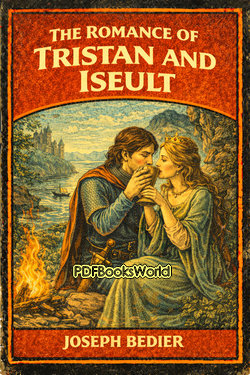
The Romance of Tristan and Iseult
by Joseph Bedier
Love, Fate, and Tragedy in One of the Great Legends of Medieval Romance
Secret passion, loyalty divided by honor, dangerous journeys, enchanted destiny, and heartbreaking sacrifice shape the timeless story of The Romance of Tristan and Iseult retold by Joseph Bédier. Drawn from medieval legends that circulated across Europe for centuries, the tale remains one of the foundational works of tragic romance in Western literature.
Bédier’s version brings together scattered medieval sources into a beautifully unified narrative filled with emotional intensity, poetic atmosphere, and fatal love.
A Love Born Through Fate and Magic
The story begins when Tristan, a noble and courageous knight, escorts the Irish princess Iseult to Cornwall so she may marry King Mark. During the journey, however, Tristan and Iseult accidentally drink a powerful love potion intended for the royal marriage.
From that moment forward, they become bound together by overwhelming and uncontrollable passion.
Their love creates emotional ecstasy but also betrayal, secrecy, and inevitable tragedy.
The Conflict Between Love and Duty
One of the legend’s greatest strengths is the tension between personal desire and social obligation.
Tristan remains loyal to King Mark, yet his love for Iseult constantly undermines that loyalty. Iseult herself becomes trapped between royal duty and emotional devotion.
The story repeatedly asks whether human beings can escape fate once powerful emotions take hold.
Love appears both beautiful and destructive at the same time.
The Medieval World of Knights and Honor
The legend unfolds within a world shaped by medieval ideals of chivalry, kingship, loyalty, and courtly behavior.
Readers encounter:
- Knights proving courage through combat and adventure
- Castles, forests, and dangerous sea voyages
- Codes of honor and feudal loyalty
- Secret meetings and hidden identities
This atmosphere gives the romance both grandeur and emotional intensity.
Nature and Symbolism Throughout the Tale
Nature plays an important symbolic role within the story. Forests become places of exile and freedom, while the sea often represents uncertainty, destiny, and emotional transformation.
The famous love potion itself symbolizes forces beyond rational control.
Bédier’s retelling emphasizes poetic imagery and emotional atmosphere, allowing the legend to feel dreamlike and timeless.
Joseph Bédier’s Literary Retelling
Rather than producing a strict academic translation, Joseph Bédier crafted a literary reconstruction designed to preserve the beauty and emotional power of the medieval sources.
His prose remains elegant, lyrical, and accessible while maintaining the spirit of medieval storytelling.
The narrative moves with clarity and emotional momentum, balancing romance, adventure, and tragedy.
Why The Romance of Tristan and Iseult Still Endures
The Romance of Tristan and Iseult continues to captivate readers because its themes remain universal. Love complicated by duty, emotional obsession, sacrifice, jealousy, and fate still resonate deeply across cultures and generations.
For readers interested in medieval literature, legendary romance, tragic love stories, Arthurian tradition, and poetic storytelling, Joseph Bédier’s retelling remains one of the most moving and influential romances ever written.
Similar Genres
About the Author
Joseph Bédier was a French scholar, literary historian, translator, and author whose work played a major role in preserving and popularizing the great legends of medieval Europe. He devoted much of his career to studying ancient manuscripts, epic poems, and medieval romances, making these timeless stories accessible to modern readers. Explore Joseph Bedier books to discover the author's life, literary career, and access notable works.