
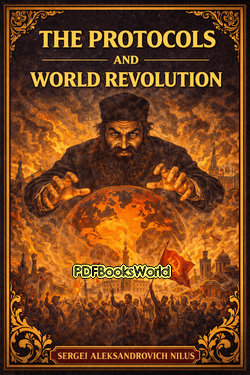
The Protocols and World Revolution
by Sergei Aleksandrovich Nilus
A Controversial and Historically Important Political Text
The Protocols and World Revolution by Sergei Aleksandrovich Nilus is a highly controversial political work connected to one of the most widely discredited conspiracy texts in modern history. The book is associated with The Protocols of the Elders of Zion, a fabricated document falsely claiming the existence of a secret plot for world control.
Historians and researchers have shown that the text was not authentic and was created to spread antisemitic ideas and political fear. Despite being proven false many times, the work influenced political propaganda and extremist movements during the twentieth century. Today, it is mainly studied as a historical example of misinformation, conspiracy theory, and political manipulation.
The Historical Background of the Book
The book appeared during a period of political unrest, social instability, and growing fear in parts of Europe and Russia. During these years, conspiracy theories and political propaganda were often used to blame minority groups for social and economic problems.
The text claimed to reveal secret plans for global control, but later investigations proved that large sections were copied from earlier political satire and fictional works. Scholars demonstrated that the material had been altered and falsely presented as real evidence.
Because of this, the book is now viewed by historians as a dangerous example of fabricated political writing designed to encourage prejudice and division.
The Writing Style and Political Purpose
The writing uses dramatic language and secretive claims to create fear and suspicion. Much of the text is written in a serious and persuasive tone intended to make readers believe the conspiracy was real.
Like many propaganda works, the book attempts to simplify complex political and social problems by blaming a single group of people. This style helped spread distrust and hatred during periods of uncertainty and political conflict.
Modern historians study the book not for factual information, but to understand how false narratives and political propaganda can influence society.
Main Issues Connected to the Book
- The spread of conspiracy theories and misinformation
- The use of propaganda to influence public opinion
- Antisemitism and political extremism
- The danger of fabricated historical documents
Why the Book Is Studied Today
The Protocols and World Revolution remains historically important because it demonstrates how false information can be used to encourage fear, hatred, and political manipulation. Historians, journalists, and scholars often study the work as an example of propaganda and the harmful effects of conspiracy theories.
The book also serves as a warning about the dangers of accepting sensational claims without evidence or careful investigation. Its influence on extremist politics during the twentieth century makes it an important subject in discussions about misinformation and prejudice.
Modern readers generally approach the work critically and within historical context rather than treating it as factual material.
Historical Impact and Public Reaction
Over time, researchers, courts, and historians repeatedly exposed the text as fraudulent. Many governments, scholars, and organizations condemned the work because of its role in spreading antisemitic beliefs and political hatred.
Even after being discredited, the text continued to appear in extremist movements and propaganda campaigns in different parts of the world. This continued influence has made the book an important case study in the history of disinformation.
The controversy surrounding the work remains significant because it shows how harmful false narratives can spread during periods of fear and instability.
Final Thoughts
The Protocols and World Revolution by Sergei Aleksandrovich Nilus is best understood today as a historically important but thoroughly discredited political text connected to antisemitic propaganda and conspiracy theory. Rather than providing reliable information, the work demonstrates how fabricated documents can be used to manipulate public opinion and spread prejudice.
For readers interested in political history, propaganda studies, and the history of misinformation, the book remains important as a cautionary historical example rather than a trustworthy source of fact.
Similar Genres
About the Author
Sergei Aleksandrovich Nilus was a Russian religious writer and mystic whose publications reflected his deep interest in Orthodox Christianity, spirituality, and the political and social upheavals of the early twentieth century. He wrote during a period of profound change in the Russian Empire, when religious, political, and philosophical debates shaped public life. Explore Sergei Aleksandrovich Nilus books to discover the author's life, literary career, and access notable works.