
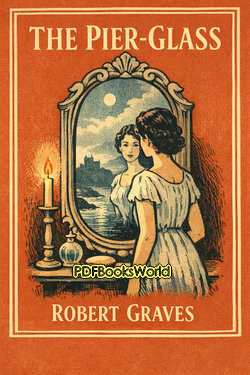
The Pier-Glass
by Robert Graves
Memory, Reflection, and Inner Conflict in Robert Graves’s Poetic World
A mirror does more than reflect appearances. It can reveal anxiety, longing, fragmented memory, hidden identity, and emotional truth. In The Pier-Glass, Robert Graves uses poetry to explore the unstable relationship between the outer world and the private self, creating a collection filled with symbolism, introspection, mythic imagery, and psychological tension.
The work reflects Graves’s distinctive poetic voice, where classical influence, personal emotion, and intellectual complexity merge into highly imaginative verse.
Poetry Focused on Inner Experience
Rather than describing external events in straightforward narrative form, many poems in the collection turn inward toward memory, perception, love, fear, and emotional uncertainty.
The “pier-glass” itself suggests distorted reflection. What people see may not fully match reality, and identity often appears unstable or divided.
Graves repeatedly examines the tension between appearance and hidden truth.
Images and Ideas Running Through the Collection
The poems move through shifting emotional landscapes filled with symbolic imagery and layered meaning.
- Mirrors and reflections representing fractured identity
- Mythological references connecting modern emotion with ancient archetypes
- Dreamlike scenes blending memory and imagination
- Love and emotional conflict explored with intensity and ambiguity
These recurring elements create a poetic atmosphere that feels mysterious and psychologically rich.
The Influence of Myth and Symbolism
Robert Graves often drew inspiration from mythology, ritual, folklore, and ancient literary traditions. In this collection, symbolic imagery becomes central to emotional expression.
Instead of explaining feelings directly, Graves allows objects, landscapes, and mythic references to carry emotional meaning beneath the surface.
This approach gives the poems depth while inviting multiple interpretations.
Emotion Beneath Intellectual Control
Although Graves writes with careful craftsmanship and intellectual precision, strong emotion constantly moves beneath the poems.
Readers encounter themes involving:
- Isolation and self-examination
- The instability of memory
- The complexity of romantic attachment
- The search for authenticity and meaning
The emotional tension between reason and feeling gives the collection much of its power.
The Distinctive Style of Robert Graves
Graves’s poetry combines lyrical elegance with symbolic complexity. His language often feels controlled and musical even when addressing emotional disturbance or psychological confusion.
The poems reward careful reading because meanings frequently unfold through suggestion rather than direct explanation.
This balance between clarity and mystery helped establish Graves as one of the major literary voices of the twentieth century.
Why The Pier-Glass Still Resonates
The Pier-Glass continues to interest readers because questions involving identity, perception, emotional truth, and self-understanding remain timeless. Graves explores the uncertainty hidden beneath human consciousness with unusual poetic intelligence.
For readers interested in modern poetry, symbolic literature, psychological introspection, and myth-infused verse, Robert Graves’s collection offers a thoughtful and haunting literary experience shaped by reflection, ambiguity, and emotional depth.
Similar Genres
About the Author
Robert Graves was an English poet, novelist, historian, and classical scholar whose remarkable career spanned many decades. He is widely recognized for his contributions to modern poetry as well as his historical novels and studies of mythology. Explore Robert Graves books to discover the author's life, literary career, and access notable works.