
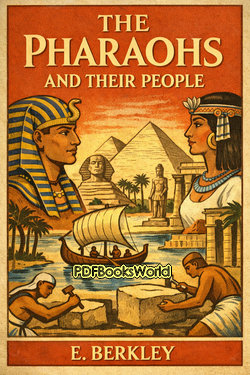
The Pharaohs and Their People
by E. Berkley
Ancient Egypt, Royal Power, and Daily Life Along the Nile
The Pharaohs and Their People by E. Berkley is a historical study introducing readers to the civilization of ancient Egypt through its rulers, religious beliefs, social customs, architecture, and everyday life. The book combines accessible historical explanation with cultural description while exploring how the pharaohs governed one of the world’s most enduring and influential ancient societies.
Berkley presents Egypt not simply as a land of pyramids and tombs, but as a highly organized civilization shaped by religion, political authority, agricultural life, and deep respect for tradition and the afterlife.
The World of the Pharaohs
The book examines the role of the pharaoh as both political ruler and sacred figure within Egyptian society. Pharaohs were viewed not merely as kings, but as divine representatives responsible for maintaining order, justice, and harmony throughout the kingdom.
Berkley describes the rise of monumental architecture including pyramids, temples, statues, and tombs that symbolized royal power and spiritual belief. The Nile River appears throughout the work as the foundation of Egyptian prosperity, providing fertile land, transportation, and stability for centuries of civilization.
In addition to royal history, the book explores the lives of ordinary Egyptians including farmers, artisans, priests, soldiers, and merchants whose labor sustained the kingdom.
Rather than focusing only upon famous rulers, the narrative attempts to reconstruct the broader social world surrounding Egyptian civilization.
Its tone combines historical explanation, educational storytelling, and fascination with ancient culture.
Religion, Power, and the Afterlife
A major theme throughout the book is the close relationship between religion and government within ancient Egypt. Berkley repeatedly explains how belief in gods, sacred kingship, and the afterlife shaped law, architecture, burial customs, and social order.
The Egyptians’ concern with death and immortality receives special attention through descriptions of mummification, tomb construction, funerary rituals, and elaborate preparations for life beyond death.
The work also reflects early modern fascination with archaeology and the rediscovery of ancient Egypt following major nineteenth- and twentieth-century excavations.
This combination of historical study and cultural interpretation gives the book enduring educational value.
Historical Themes Explored Throughout the Book
- Ancient Egyptian Civilization: The book examines the structure and achievements of Egyptian society.
- Royal Authority and Sacred Kingship: Pharaohs ruled through both political and religious power.
- The Nile and Agricultural Life: Egypt’s prosperity depended upon the river and seasonal farming.
- Religion and the Afterlife: Spiritual beliefs shaped burial practices and monumental architecture.
- Daily Life and Social Structure: Ordinary people played essential roles within the kingdom’s stability.
The book stands as both historical introduction and cultural portrait of one of history’s greatest civilizations.
The Endurance of Ancient Egypt
One of the work’s strongest ideas is that Egypt’s long survival depended upon balance between political authority, religious tradition, and environmental stability.
Berkley repeatedly demonstrates how shared beliefs and organized social structure allowed Egyptian civilization to endure for thousands of years.
The book also reveals continuing fascination with Egypt’s monuments, mysteries, and artistic achievements across modern history.
This sense of historical continuity gives the narrative lasting appeal.
E. Berkley’s Educational Historical Style
The Pharaohs and Their People demonstrates E. Berkley’s ability to explain ancient history through accessible language and organized cultural description.
The writing remains informative, clear, and strongly focused upon helping readers understand both the grandeur and everyday realities of Egyptian civilization.
Berkley consistently presents history as a living story shaped by rulers, workers, beliefs, and environment together.
Why the Book Still Holds Historical Interest
Modern readers continue finding The Pharaohs and Their People valuable because it introduces the political, religious, and social foundations of ancient Egypt in an approachable and engaging way.
The book also provides insight into early popular historical writing and the enduring fascination with Egyptian civilization, archaeology, and royal history.
Its themes of leadership, religion, architecture, daily life, and cultural continuity continue appealing to readers interested in the ancient world.
For readers interested in Egyptology, ancient civilizations, pharaohs, archaeology, world history, religious traditions, and historical education, this work remains informative, accessible, and historically fascinating.
Similar Genres
About the Author
E. Berkley was a historical writer and educator whose work focused on introducing readers to the civilizations of the ancient world through clear and engaging narratives. By combining historical research with accessible storytelling, Berkley sought to make the people, cultures, and achievements of antiquity understandable to general audiences. Explore E. Berkley books to discover the author's life, literary career, and access notable works.