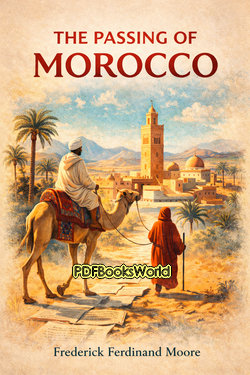
The Passing of Morocco
by Frederick F. Moore
A Travel and Historical Account of a Changing North African Kingdom
The Passing of Morocco by Frederick F. Moore is a fascinating travel narrative and historical commentary that examines Morocco during a period of profound political and social transformation. Written in the early twentieth century, the book records the author's observations of Moroccan society, culture, government, and international affairs at a time when increasing European influence was reshaping the country's future. Through firsthand descriptions and historical reflections, Moore captures a society standing at the crossroads between tradition and modernity.
Morocco at a Turning Point
The title refers not to the disappearance of Morocco itself but to the gradual passing of an older way of life. During the period in which Moore traveled, Morocco faced growing pressure from European powers seeking political influence and economic advantages. Long-established institutions and customs were being challenged by new realities, creating uncertainty about the nation's future direction.
The book documents this transitional moment with considerable detail and immediacy.
Major Subjects Covered
- Moroccan Society: Daily life, customs, traditions, and social structures.
- Political Affairs: Government, leadership, and international diplomacy.
- European Influence: The expanding role of foreign powers in Moroccan affairs.
- Travel and Exploration: Observations gathered during journeys through the country.
- Cultural Heritage: Architecture, religion, and historical traditions.
A Portrait of Traditional Morocco
Moore provides vivid descriptions of cities, markets, villages, and landscapes. He records aspects of Moroccan life that had changed little over generations, offering readers a glimpse of customs and institutions rooted in centuries of history. His observations emphasize the distinctive character of Moroccan culture and its deep historical foundations.
These descriptions form some of the most memorable portions of the book.
The International Context
A significant portion of the narrative concerns the growing involvement of European nations in Moroccan politics. During the early twentieth century, Morocco became the focus of diplomatic rivalries among major powers. Moore discusses these developments and their potential consequences for the country's independence and stability.
The book therefore serves as both a travel account and a study of international affairs.
Frederick F. Moore as Observer
Frederick F. Moore was a journalist and traveler whose writings often combined firsthand observation with political analysis. His ability to describe places and events in an engaging manner helps bring the period to life. Readers encounter not only historical facts but also the impressions of someone witnessing change as it occurred.
This perspective adds immediacy and narrative energy to the work.
Culture, Religion, and Tradition
Beyond politics, Moore pays attention to the cultural and religious dimensions of Moroccan society. He describes architecture, customs, and social practices that contributed to the nation's unique identity. These observations help readers understand the traditions that many Moroccans sought to preserve during a time of increasing external influence.
The cultural focus enriches the book's historical value.
A Historical Snapshot of Transformation
Today, the work is especially valuable because it captures Morocco during a critical period in its history. The changes Moore observed would eventually contribute to major political developments and alter the relationship between Morocco and the wider world.
As a result, the book serves as an important historical record of a society in transition.
Why the Book Remains Relevant
Readers interested in North African history, travel literature, colonial-era politics, and cultural change continue to find the book informative. It offers insight into the complexities of modernization and the challenges faced by societies encountering powerful external influences.
The combination of travel narrative and historical observation gives the work enduring significance.
A Valuable Record of a Nation in Transition
The Passing of Morocco presents a vivid portrait of Morocco during a pivotal chapter in its history. Through descriptions of its people, traditions, politics, and international challenges, Frederick F. Moore documents the tensions between continuity and change that shaped the country's future. The book remains an engaging travel account and an important historical resource for understanding Morocco's transformation in the early twentieth century.
Similar Genres
About the Author
Frederick F. Moore, born Frederick Ferdinand Moore, was an American journalist, war correspondent, travel writer, and novelist whose adventurous career took him to some of the world's most turbulent regions during the late nineteenth and early twentieth centuries. Explore Frederick F. Moore books to discover the author's life, literary career, and access notable works, including Siberia To-Day , and more.