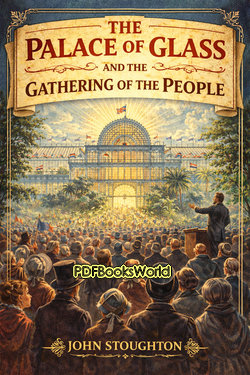
The Palace of Glass and the Gathering of the People
by John Stoughton
A Reflection on Society, Progress, and Public Exhibition in the Victorian Era
The Palace of Glass and the Gathering of the People by John Stoughton is a thoughtful work inspired by the Great Exhibition of 1851 and the famous Crystal Palace, one of the defining symbols of Victorian progress and industrial achievement. Through cultural reflection and social commentary, the book examines the meaning of large public gatherings, technological advancement, and the moral direction of modern society.
The Crystal Palace represented far more than architecture alone. It became a symbol of industry, invention, empire, commerce, and international exchange during a period of rapid social and technological transformation in Britain.
Stoughton uses the occasion to reflect on humanity’s achievements as well as the ethical and spiritual questions raised by modern progress.
The Meaning of the Crystal Palace and the Great Exhibition
The work discusses the enormous public exhibition that brought together inventions, manufactured goods, artistic works, and cultural displays from many nations. Crowds gathered to witness the achievements of industry, science, and craftsmanship displayed within the remarkable glass structure.
Stoughton reflects not only on technological innovation, but also on what such events reveal about civilization, ambition, and human cooperation. The gathering of people from different backgrounds and nations becomes a symbol of modern interconnected society.
The book also considers whether material progress alone is enough without moral and spiritual development.
The Reflective Style of John Stoughton
John Stoughton writes in an eloquent and contemplative style blending cultural observation with moral and religious reflection. His language reflects the intellectual seriousness and optimism often associated with Victorian public writing.
The work combines admiration for scientific and industrial achievement with concern for ethical responsibility and social harmony.
Stoughton’s thoughtful approach transforms a public exhibition into a broader meditation on modern civilization and human progress.
Main Themes and Social Reflections
The book explores themes of industrial progress, public culture, international cooperation, moral responsibility, and the relationship between material advancement and spiritual values. It also reflects Victorian fascination with innovation and large-scale public events.
Through its discussion of the Crystal Palace and the Great Exhibition, the work examines how societies define progress and civilization.
Why the Book Still Holds Historical Interest
The Palace of Glass and the Gathering of the People remains historically important because it captures Victorian reactions to one of the nineteenth century’s most famous public exhibitions. Readers interested in cultural history and industrial history often value the work for its insight into public attitudes toward technology and social change.
The book also reveals how intellectuals and religious thinkers attempted to interpret rapid modernization during the industrial age.
Its reflections on progress and society continue to feel historically meaningful.
The Lasting Importance of the Crystal Palace and the Great Exhibition
The Great Exhibition of 1851 became a landmark event in global industrial and cultural history. The Crystal Palace symbolized technological innovation, international exchange, and Victorian confidence in progress and industry.
At the same time, writers and thinkers debated the moral consequences of industrial growth and expanding modern society.
The continuing study of Victorian culture and industrial history helps preserve interest in works like this.
Final Thoughts
The Palace of Glass and the Gathering of the People by John Stoughton is a reflective and historically significant work examining industrial progress, public culture, and the moral meaning of modern civilization during the Victorian era. Through thoughtful observation and cultural commentary, the book transforms the Crystal Palace and the Great Exhibition into symbols of both human achievement and ethical responsibility.
For readers interested in Victorian history, industrial culture, social thought, and the history of public exhibitions, this work remains both informative and intellectually engaging.
Similar Genres
About the Author
John Stoughton was an English Congregational minister, church historian, biographer, and prolific author whose writings explored the history of Christianity, the English Reformation, and the development of Nonconformist religious thought. Explore John Stoughton books to discover the author's life, literary career, and access notable works, including Ecclesiastical History of England, The Church of the Restoration, Vol. 1 of 2, Christian Literature , and more.