
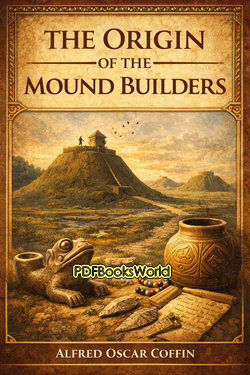
The Origin of the Mound Builders
by Alfred Oscar Coffin
A Nineteenth-Century Study of Ancient Earthworks and North American Archaeology
The Origin of the Mound Builders by Alfred Oscar Coffin is a historical and archaeological study examining the mysterious earthen mounds and ancient structures found throughout parts of North America. Written during a period when scholars and the public were intensely fascinated by the origins of these prehistoric earthworks, the book explores theories about the people responsible for constructing them and the civilizations connected with their creation.
The work reflects nineteenth-century archaeological thinking, when debates surrounding the “Mound Builders” often mixed scientific investigation with speculation and incomplete understanding of Indigenous history. Modern archaeology now recognizes that the mounds were built by various Native American cultures over many centuries.
The volume blends archaeology, anthropology, and historical interpretation.
The Mystery of the Mound Builders
The Mound Builders: A term historically used to describe the Indigenous peoples of North America who constructed ceremonial, burial, defensive, and residential earthworks across regions including the Mississippi and Ohio River valleys.
The book likely discusses mound structures, burial sites, artifacts, settlement patterns, and theories concerning the social organization and cultural development of the peoples who created them.
Coffin may examine earlier speculative claims about lost civilizations or vanished races, ideas that were common in nineteenth-century scholarship but later rejected by modern archaeology.
The atmosphere combines scientific curiosity, historical mystery, and cultural speculation.
The Scholarly Style of Alfred Oscar Coffin
Alfred Oscar Coffin writes in an analytical and investigative style emphasizing historical evidence, archaeological observation, and comparative interpretation. His prose reflects the intellectual climate of late nineteenth-century anthropology and archaeology.
The language combines academic seriousness with fascination toward ancient history and cultural origins.
Coffin’s methodical discussion gives the work historical significance as a document of early archaeological thought.
Main Themes and Historical Reflection
The book explores themes of ancient civilization, cultural identity, archaeology, historical memory, Indigenous history, scientific inquiry, migration, social development, and humanity’s fascination with lost societies.
Through examination of mound structures and archaeological theories, the work reflects evolving attempts to understand the deep history of North America.
Why the Book Still Holds Importance
The Origin of the Mound Builders remains historically valuable because it illustrates how nineteenth-century scholars approached archaeology and Indigenous history before the development of modern archaeological methods and understanding.
The work also provides insight into the intellectual assumptions and cultural debates surrounding Native American civilizations during that period.
Its historical perspective continues to make it significant for the study of archaeology and historiography.
The Lasting Importance of Mound Builder Studies
Modern archaeology has established that the mound-building traditions of North America were created by sophisticated Indigenous cultures including the Adena, Hopewell, and Mississippian civilizations. These societies developed complex social systems, trade networks, ceremonial centers, and monumental earthworks long before European contact.
Earlier misconceptions about mysterious lost races have been replaced by greater recognition of Native American cultural achievement and historical continuity.
The continuing study of Indigenous archaeology and North American prehistory helps preserve interest in works like this.
Final Thoughts
The Origin of the Mound Builders by Alfred Oscar Coffin is an important historical study reflecting nineteenth-century archaeological attempts to explain the ancient earthworks of North America. Through investigation, speculation, and historical interpretation, the book reveals both the curiosity and limitations of early archaeological scholarship.
For readers interested in archaeology, Indigenous history, historiography, and the history of scientific thought, this work remains both intellectually revealing and historically significant.
Similar Genres
About the Author
Alfred Oscar Coffin was an American educator, scholar, and writer whose academic interests included history, anthropology, archaeology, and the study of early civilizations. As a researcher committed to examining historical evidence, Coffin sought to explore questions about the origins and development of ancient societies in North America. Explore Alfred Oscar Coffin books to discover the author's life, literary career, and access notable works.