
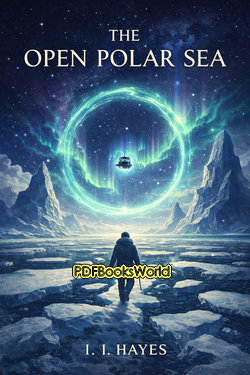
The Open Polar Sea
by I. I. Hayes
An Explorer's Quest into the Arctic Unknown
The Open Polar Sea by Isaac Israel Hayes is a fascinating account of Arctic exploration during the nineteenth century, chronicling one of the era's most ambitious attempts to investigate the mysteries of the far north. Combining travel narrative, scientific observation, and personal adventure, Hayes recounts his expedition into regions that remained largely unknown to much of the world.
The book reflects a period when the Arctic represented one of the last great frontiers of exploration. Questions about geography, climate, and the possibility of an ice-free polar ocean inspired explorers to undertake dangerous journeys into some of the harshest environments on Earth. Hayes's narrative captures both the excitement and the hardships of this pursuit.
As a firsthand account, the work provides valuable insight into the challenges and aspirations of nineteenth-century exploration.
The Theory of an Open Polar Sea
A central idea behind Hayes's expedition was the theory that a navigable, ice-free sea might exist around the North Pole. This concept, known as the "Open Polar Sea" hypothesis, gained support among some scientists and explorers who believed that warmer currents could maintain open water beyond the surrounding belt of Arctic ice.
The possibility of such a sea fueled numerous expeditions and inspired hopes of discovering new routes through the Arctic. Hayes undertook his journey in part to investigate this theory and gather evidence concerning the nature of the polar regions.
The book documents his efforts to determine whether such a phenomenon actually existed.
The Challenges of Arctic Exploration
The expedition faced extraordinary obstacles. Travel through the Arctic required endurance, careful planning, and the ability to adapt to extreme conditions.
Hayes describes many of the difficulties encountered during the voyage:
- Severe cold and unpredictable weather.
- Travel across ice-covered terrain.
- Limited supplies and logistical challenges.
- Navigation in remote and unfamiliar regions.
These hardships illustrate the risks accepted by explorers seeking to expand geographical knowledge.
Observations of the Arctic Environment
Beyond its adventurous elements, the book serves as a record of scientific observation. Hayes carefully documents landscapes, ice formations, wildlife, and environmental conditions encountered during the expedition.
His descriptions help readers visualize a region that few people of his time would ever see. Mountains of ice, frozen coastlines, and vast stretches of snow create a dramatic setting that emphasizes both the beauty and the severity of the Arctic.
The narrative combines exploration with a naturalist's appreciation for the surrounding environment.
Encounters with Indigenous Peoples
An important aspect of Hayes's account involves his interactions with the Indigenous peoples of the Arctic. He observes their customs, skills, and methods of surviving in an environment that challenged even the most experienced explorers.
These encounters provided valuable knowledge that often contributed to the success of Arctic expeditions. Indigenous expertise regarding travel, hunting, and adaptation to local conditions offered insights unavailable through European scientific training alone.
The book reflects both the curiosity and the limitations of nineteenth-century perspectives on cultural exchange.
Isaac Israel Hayes as Explorer and Author
Isaac Israel Hayes was not only an explorer but also a physician and scientist. His background influenced the way he approached exploration, encouraging careful observation and detailed documentation.
In writing The Open Polar Sea, Hayes sought to share both the practical realities of Arctic travel and the broader significance of scientific discovery. His narrative combines personal experience with geographical and environmental information, making the work informative as well as engaging.
This blend of adventure and scholarship contributed to the book's lasting appeal.
The Historical Importance of the Expedition
Although later exploration would challenge aspects of the Open Polar Sea theory, Hayes's expedition played an important role in expanding knowledge of the Arctic. His observations added to the growing body of information that helped scientists and geographers better understand polar regions.
The book also reflects the spirit of nineteenth-century exploration, an era characterized by curiosity, ambition, and a determination to investigate the unknown.
Today, it remains a valuable historical document illustrating both the achievements and the uncertainties of Arctic exploration.
Final Thoughts
The Open Polar Sea by Isaac Israel Hayes is an absorbing account of exploration, scientific inquiry, and human endurance in one of the world's most challenging environments. Through vivid descriptions of Arctic landscapes, careful observations, and firsthand experiences, Hayes captures the excitement of a quest to uncover the secrets of the far north.
For readers interested in exploration history, Arctic studies, geography, and adventure narratives, this work offers a compelling glimpse into an era when vast regions of the globe remained unexplored and the search for knowledge demanded extraordinary courage.
Similar Genres
About the Author
Isaac Israel Hayes, widely known as I. I. Hayes, was an American physician, Arctic explorer, lecturer, and author whose expeditions helped expand knowledge of the Earth's northernmost regions. Explore I. I. Hayes books to discover the author's life, literary career, and access notable works.