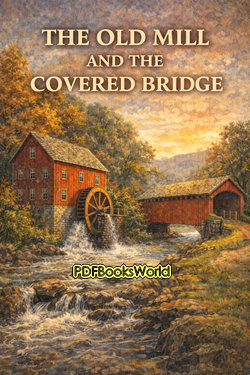
The Old Mill and the Covered Bridge
by Anonymous
Rural Memory and the Changing Landscape of Early America
The Old Mill and the Covered Bridge by Anonymous is a nostalgic historical and descriptive work reflecting upon traditional rural life, local craftsmanship, and the quiet beauty of older American communities. Centered around two familiar symbols of the countryside, the old mill and the covered bridge, the narrative explores how technology, nature, and community life once blended within small towns and agricultural regions.
The work presents these structures not merely as practical buildings, but as enduring symbols of labor, cooperation, and cultural memory.
The Importance of the Old Mill
The old mill served as an essential center of economic and social activity within rural communities. Farmers brought grain for grinding while neighbors exchanged news, stories, and daily experiences. Water-powered machinery transformed natural energy into productive labor supporting local agriculture and trade.
The narrative describes the sounds, movement, and atmosphere surrounding the mill, emphasizing its role within everyday life before large-scale industrialization changed rural economies.
Rather than focusing solely upon machinery, the work highlights the human relationships and traditions connected with the mill’s operation.
The Covered Bridge as a Symbol of Community
A major theme throughout the account is the covered bridge as both a practical structure and a cultural landmark. Built to protect wooden supports from weather and decay, covered bridges became familiar features of the American countryside and symbols of craftsmanship and endurance.
The work also reflects changing attitudes toward modernization and industrial progress. As railroads, factories, and modern roads expanded, older rural structures gradually disappeared, creating feelings of nostalgia for simpler forms of community life.
At the same time, the narrative celebrates the beauty of landscapes shaped by rivers, forests, farms, and traditional architecture.
This combination of historical reflection and rural imagery gives the work lasting charm.
Historical and Cultural Themes Explored Throughout the Work
- Rural Community Life: Mills and bridges served as important social and economic centers.
- Traditional Craftsmanship: Builders and mill workers demonstrated practical engineering skill.
- Nature and Industry: Water power connected natural resources with productive labor.
- Nostalgia and Historical Change: Modernization transformed older forms of rural existence.
- Preservation of Cultural Heritage: Historic structures became symbols of local memory and identity.
The Work’s Reflective Style
The Old Mill and the Covered Bridge uses a warm and descriptive narrative style focused upon atmosphere, memory, and appreciation for rural traditions. The anonymous author combines historical observation with emotional reflection upon disappearing aspects of community life.
The work consistently presents rural America as a world shaped by cooperation, craftsmanship, and natural beauty.
Why the Book Still Holds Historical Interest
Modern readers continue finding The Old Mill and the Covered Bridge appealing because its themes of rural heritage, historical preservation, craftsmanship, and nostalgia remain emotionally meaningful today. The work also preserves valuable impressions of community life before rapid industrial modernization transformed the American countryside.
Its themes of local history, traditional engineering, rural culture, architecture, and historical memory continue appealing to readers interested in Americana, transportation history, rural studies, and historic preservation.