
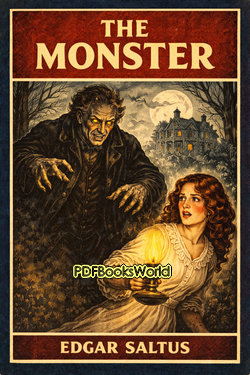
The Monster
by Edgar Saltus
Beauty, Decadence, and Moral Corruption in a Disturbing Psychological Tale
The Monster by Edgar Saltus is not a conventional creature story filled with physical horror and violent spectacle. Instead, the novel explores a darker and more psychological form of monstrosity rooted in vanity, obsession, corruption, and the dangerous pursuit of pleasure and power. Saltus approaches horror through atmosphere, intellect, and moral decay rather than through simple terror alone.
The result is a strange and unsettling work shaped by the decadent literary movement of the late nineteenth century.
A World Obsessed With Excess and Sensation
The novel unfolds within sophisticated social environments where appearances, luxury, temptation, and emotional manipulation hold enormous influence. Beneath elegance and refinement, however, lies moral emptiness and psychological danger.
Saltus portrays characters drawn toward destructive desires, selfish ambition, and emotional cruelty while attempting to maintain civilized appearances.
The “monster” of the title gradually becomes associated less with physical abnormality and more with spiritual and moral corruption.
What Gives the Story Its Uneasy Power?
Rather than relying heavily on action, the novel creates tension through emotional conflict and psychological atmosphere.
- Characters conceal hidden motives behind charm and sophistication
- Desire and vanity distort judgment and morality
- Beauty becomes dangerous when disconnected from conscience
- Social elegance masks corruption beneath the surface
This subtle approach gives the novel a lingering sense of unease.
The Influence of Decadent Literature
Edgar Saltus belonged to the literary culture associated with decadence and aestheticism, movements fascinated by beauty, sensation, moral ambiguity, and psychological intensity.
Writers connected with this tradition often explored:
- The conflict between morality and pleasure
- The attraction of forbidden experience
- Artificial sophistication and emotional emptiness
- The darker side of refined society
The Monster reflects many of these themes while maintaining its own distinctive atmosphere.
The Psychological Meaning of “Monster”
One of the novel’s most compelling aspects is its suggestion that monstrosity can exist within ordinary human behavior. Cruelty, selfishness, obsession, manipulation, and emotional corruption become more frightening than physical deformity.
Saltus encourages readers to question where true evil originates and whether society itself sometimes rewards destructive behavior hidden beneath elegance and charm.
The horror therefore becomes inward and psychological rather than external.
The Style and Language of Edgar Saltus
Saltus writes with sophistication, irony, and richly polished prose. His language often feels theatrical, intellectual, and deliberately stylized.
Descriptions focus strongly on mood, emotional tension, and aesthetic detail rather than realistic simplicity.
This literary elegance creates a sharp contrast with the darker moral themes running through the story.
Why The Monster Still Fascinates Modern Readers
The Monster remains intriguing because psychological corruption and moral emptiness continue to resonate in modern literature and culture. Saltus explores fears connected not with external creatures, but with hidden darkness inside human desire and social ambition.
For readers interested in decadent fiction, psychological horror, Gothic atmosphere, and morally complex literature, Edgar Saltus’s novel offers a darkly intelligent exploration of beauty, temptation, and human corruption.
Similar Genres
About the Author
Edgar Saltus was an American author, essayist, and literary critic known for his elegant prose and thoughtful exploration of history, philosophy, and human nature. His writings often blended fiction with intellectual reflection, creating stories that encouraged readers to think about morality, ambition, beauty, and the complexities of the human mind. Explore Edgar Saltus books to discover the author's life, literary career, and access notable works.