
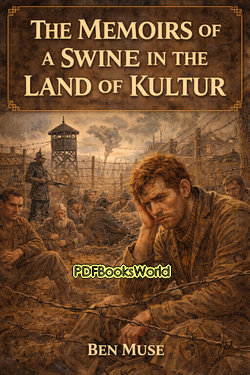
The Memoirs of a Swine in the Land of Kultur
by Benjamin Muse
Satire, Politics, and a Pig’s Unusual Perspective
The Memoirs of a Swine in the Land of Kultur by Benjamin Muse is a clever satirical work that uses humor and imagination to comment on politics, society, and the events of its time. By presenting the story through the eyes of a pig, the author creates a unique perspective that allows readers to view human behavior from an unexpected angle. The result is a blend of comedy, social criticism, and political observation that remains both entertaining and thought-provoking.
Written during a period of international conflict and intense political debate, the book uses wit and irony to explore serious issues while maintaining a light and engaging tone.
An Unusual Narrator Tells the Story
The memoir takes the form of a personal account written by a swine living in the so-called "Land of Kultur." Through this unusual narrator, readers encounter a world where political ideas, national ambitions, and social customs are examined with humor and skepticism.
The pig's observations often reveal contradictions and absurdities in human behavior. Because the narrator stands outside ordinary society, he can comment freely on events and attitudes that people may take for granted.
Notable Elements of the Narrative
- A Satirical Narrator: A pig whose observations provide humor and insight.
- Political Commentary: Reflections on power, nationalism, and public opinion.
- Social Criticism: Examination of customs and behaviors through satire.
- Humorous Storytelling: Lighthearted scenes that carry deeper meanings.
The Power of Satire
One of the book's greatest strengths is its use of satire as a tool for criticism. Rather than delivering direct arguments, Muse employs humor, exaggeration, and irony to encourage readers to think critically about society and politics. The pig narrator becomes a vehicle for questioning accepted ideas and exposing flaws in human reasoning.
This approach allows serious subjects to be explored in an accessible and entertaining way. Readers can enjoy the story while also reflecting on the broader issues it raises.
Themes
- Satire: Humor is used to critique political and social behavior.
- Power and Authority: The book examines how influence is exercised and justified.
- Nationalism: Questions about identity and loyalty play a significant role.
- Human Nature: The narrator highlights strengths and weaknesses in society.
- Freedom of Thought: Independent observation challenges conventional beliefs.
A Reflection of Its Historical Moment
The Memoirs of a Swine in the Land of Kultur reflects the concerns and debates of the early twentieth century. The term "Kultur" carried political significance during this period, and the novel uses it as a backdrop for examining international tensions and competing ideologies.
While some references are rooted in the author's era, the broader themes of power, propaganda, and public opinion continue to resonate with modern readers. The book demonstrates how satire can remain relevant long after the events that inspired it have passed.
An Entertaining and Thoughtful Satirical Work
The Memoirs of a Swine in the Land of Kultur offers a distinctive combination of humor and social commentary. Through the observations of its memorable narrator, Benjamin Muse invites readers to laugh, question assumptions, and consider the complexities of political and cultural life. For those who enjoy satire, historical commentary, and unconventional storytelling, this novel provides an engaging and rewarding reading experience.
Similar Genres
About the Author
Benjamin Muse was an American journalist, editor, and author whose writings explored politics, society, and international affairs with clarity and thoughtful analysis. Throughout his career, Muse demonstrated a keen interest in public issues and the forces that shape nations and individuals. Explore Benjamin Muse books to discover the author's life, literary career, and access notable works.