
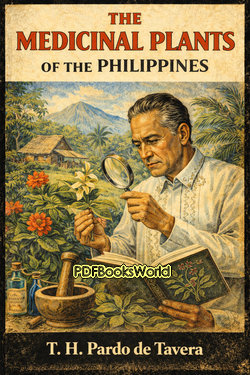
The Medicinal Plants of the Philippines
by T. H. Pardo de Tavera
Exploring the Healing Power of Philippine Plant Life
The Medicinal Plants of the Philippines by T. H. Pardo de Tavera is an important study of traditional herbal medicine and the natural plants used for healing throughout the Philippines. The book combines scientific observation with cultural knowledge, offering readers a detailed look at how local communities used native plants to treat illnesses and maintain health.
Written during a period of growing interest in botany and medical science, the work highlights the rich biodiversity of the Philippine islands while preserving valuable traditional medical practices. The book serves as both a scientific resource and a cultural record.
The Connection Between Nature and Medicine
For centuries, communities in the Philippines relied on plants as a primary source of medicine. Long before modern pharmaceutical industries developed, local healers used roots, leaves, bark, flowers, and seeds to prepare remedies for common illnesses.
Pardo de Tavera documents these practices carefully, showing how knowledge of medicinal plants was passed through generations. The book reflects the close relationship between people and the natural environment.
A Scientific Approach to Traditional Remedies
One of the book’s strengths is its effort to organize traditional herbal knowledge in a more systematic way. The author identifies plants, explains their uses, and describes the conditions they were believed to treat.
This approach helped bridge the gap between traditional healing methods and formal scientific study. Readers can see how early researchers attempted to understand folk medicine through observation and classification.
Important Subjects Covered in the Book
- Native Philippine plants used in traditional medicine
- Herbal treatments for common illnesses and infections
- The cultural importance of local healing practices
- Botanical descriptions and plant identification
- The relationship between natural resources and healthcare
These topics make the work valuable for both scientific and historical study.
The Importance of Preserving Indigenous Knowledge
The book also serves as a record of indigenous medical traditions that might otherwise have been lost over time. Many healing practices described in the text were developed through generations of observation and experience.
By documenting this knowledge, Pardo de Tavera helped preserve an important part of Philippine cultural heritage. The work highlights the intelligence and practical understanding found within traditional communities.
A Blend of Botany, Medicine, and History
The Medicinal Plants of the Philippines is more than a simple medical guide. It combines elements of botanical research, healthcare history, and cultural study. The writing reflects the scientific curiosity of the period while still respecting local traditions.
This balance between academic study and practical knowledge gives the book lasting educational value.
Why the Book Continues to Interest Readers
Today, the work remains important for readers interested in herbal medicine, ethnobotany, and the history of healthcare in Southeast Asia. Modern researchers continue to study traditional medicinal plants for their possible scientific and pharmaceutical value.
For historians, botanists, and readers curious about natural medicine, The Medicinal Plants of the Philippines offers a fascinating exploration of how nature and healing have long been connected in Philippine culture.
Similar Genres
About the Author
T. H. Pardo de Tavera was a Filipino physician, scholar, linguist, historian, and author whose work made a lasting contribution to the study of medicine, culture, language, and Philippine history. He was one of the leading intellectuals of his generation and believed that scientific research and education were essential for the progress of society. Explore T. H. Pardo de Tavera books to discover the author's life, literary career, and access notable works.