
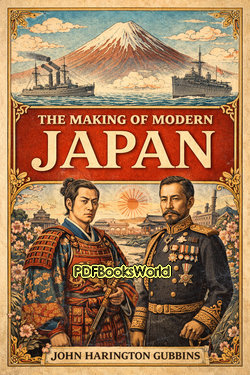
The Making of Modern Japan
by John Harington Gubbins
Tracing Japan's Remarkable Transformation into a Modern Nation
The Making of Modern Japan by John Harington Gubbins is a comprehensive study of one of the most dramatic national transformations in modern history. The book examines how Japan evolved from a largely isolated feudal society into a powerful modern state within a relatively short period. Drawing on firsthand experience and historical analysis, Gubbins explores the political, social, economic, and cultural changes that reshaped the nation and positioned it as a significant force on the world stage.
Japan at a Turning Point
For centuries, Japan maintained a unique social and political structure that emphasized stability and limited foreign influence. During the nineteenth century, however, increasing contact with other nations created pressure for change. The country faced the challenge of adapting to a rapidly modernizing world while preserving its cultural identity.
Gubbins explains how Japanese leaders responded to these challenges through a series of reforms that transformed government, industry, education, and military organization. These efforts laid the foundation for the emergence of modern Japan.
The Impact of the Meiji Era
A major focus of the book is the Meiji period, a time of sweeping reform and modernization. During this era, Japan introduced new institutions, embraced technological innovation, and expanded its engagement with the international community.
These changes were not limited to politics and economics. They also influenced daily life, social structures, and cultural attitudes. Gubbins highlights how the nation's willingness to adapt played a crucial role in its success.
Key Developments Discussed in the Book
- Political Reform: The creation of modern governmental institutions and legal systems.
- Industrial Growth: The expansion of manufacturing, transportation, and commerce.
- Educational Advancement: Efforts to improve literacy and establish modern schools.
- Military Modernization: The development of a professional and technologically advanced military.
- International Relations: Japan's growing role in global affairs and diplomacy.
John Harington Gubbins's Unique Perspective
Gubbins spent many years in Japan as a British diplomat and observer, giving him valuable firsthand knowledge of the country's transformation. His direct experience allows him to provide insights into both official policies and broader social developments.
Rather than relying solely on historical records, he combines personal observation with careful analysis. This approach helps readers understand not only what changed but also why those changes were significant.
The Balance Between Tradition and Progress
One of the book's most interesting themes is the tension between preserving traditional values and embracing modernization. Japan's leaders sought to adopt useful innovations from abroad while maintaining a strong sense of national identity.
Gubbins explores how this balance was achieved and how it contributed to Japan's ability to modernize without completely abandoning its cultural heritage. This challenge remains relevant for many societies today.
Why the Book Remains Valuable
The story of Japan's modernization continues to attract historians, economists, and political thinkers because it offers important lessons about national development and reform. Gubbins's work provides a detailed account of the decisions and circumstances that shaped this transformation.
Readers interested in Asian history, international relations, and economic development will find the book particularly rewarding. Its analysis helps explain how Japan emerged as one of the leading nations of the modern era.
A Fascinating Study of National Transformation
The Making of Modern Japan presents a detailed and engaging examination of a nation undergoing extraordinary change. Through historical analysis and firsthand observation, John Harington Gubbins explores the reforms, challenges, and achievements that shaped modern Japan. The book remains an important resource for anyone seeking to understand one of history's most remarkable examples of modernization and national development.
Similar Genres
About the Author
John Harington Gubbins was a British diplomat, scholar, and author whose extensive experience in Japan made him one of the leading Western interpreters of Japanese history, politics, and society during the late nineteenth and early twentieth centuries. Explore John Harington Gubbins books to discover the author's life, literary career, and access notable works.