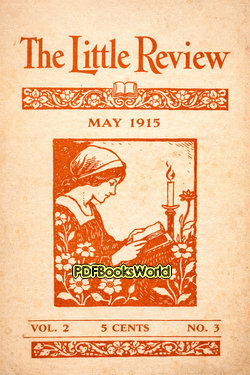
The Little Review, May 1915 (Vol. 2, No. 3)
by Various Authors
A Bold Voice of Early Modernism and Cultural Change
The Little Review, May 1915 (Vol. 2, No. 3) is an important issue of the influential literary magazine founded and edited by Margaret C. Anderson. Published during a period of artistic experimentation and social transformation, the magazine served as a platform for new literary voices, unconventional ideas, and cultural criticism. Its pages reflect the restless intellectual energy that helped shape the emerging modernist movement in the early twentieth century.
Unlike traditional literary journals of its time, The Little Review actively encouraged innovation and challenged established standards of taste. The May 1915 issue continues that mission by presenting poetry, essays, commentary, and reflections that engage with both artistic and social questions. Readers encounter a publication determined to provoke thought rather than simply entertain.
The Mission of The Little Review
From its founding in 1914, The Little Review sought to create space for experimental writing and independent criticism. Margaret Anderson believed that literature and art should not be constrained by convention, and the magazine quickly developed a reputation for publishing work that other journals might reject.
The publication became associated with modernist innovation, encouraging fresh approaches to literature, criticism, and cultural discussion. Its commitment to originality helped establish it as one of the most significant literary magazines of its era.
Literature During a Changing World
The May 1915 issue appeared during the early years of the First World War, a time when political upheaval and social uncertainty influenced artistic expression across Europe and America.
Many contributions reflect a world experiencing profound transformation. Writers explored questions of identity, conflict, culture, and the future while experimenting with new literary forms and perspectives. The magazine's content reveals how artists responded to a rapidly changing historical moment.
This connection between literature and contemporary events gives the issue both artistic and historical significance.
A Diverse Collection of Writing
The issue contains a variety of literary forms and subjects, demonstrating the magazine's broad interests and willingness to embrace different styles of expression.
- Poetry focused on emotion, introspection, and modern experience.
- Editorial commentary on artistic and social issues.
- Essays examining cultural developments.
- Reflections on political and intellectual change.
This diversity allowed readers to encounter multiple perspectives within a single publication.
Margaret Anderson's Editorial Influence
Margaret C. Anderson played a crucial role in shaping the identity of The Little Review. Her editorial vision emphasized independence, experimentation, and resistance to conventional literary standards.
Anderson encouraged contributors to explore new forms of expression and to engage openly with controversial ideas. Her willingness to support innovative writers helped establish the magazine as a leading force within modernist literary culture.
Her influence can be felt throughout the publication's distinctive character.
The Rise of Modernist Literature
The magazine occupies an important place in the history of modernism. During its years of publication, it introduced readers to experimental writers and artistic movements that would later become central to twentieth-century literature.
Although the May 1915 issue predates some of the magazine's most famous publications, it already demonstrates the qualities that would define its legacy: openness to innovation, intellectual curiosity, and a commitment to artistic freedom.
The issue captures modernism in the process of emerging rather than after it had become established.
A Valuable Historical Document
Today, the magazine provides insight into the cultural atmosphere of the early twentieth century. Readers can observe how writers responded to war, social change, artistic experimentation, and shifting intellectual values.
Because literary magazines often published new ideas before they entered mainstream culture, issues such as this one serve as important records of evolving artistic movements. They preserve voices and perspectives that shaped later developments in literature and criticism.
This historical dimension adds significantly to the publication's enduring importance.
Final Thoughts
The Little Review, May 1915 (Vol. 2, No. 3) stands as a fascinating example of early modernist publishing. Through its mixture of poetry, essays, criticism, and cultural commentary, the issue reflects a period when writers and artists were actively redefining the possibilities of literature and intellectual life.
For readers interested in literary history, modernism, cultural criticism, and the evolution of twentieth-century artistic movements, this issue offers a valuable glimpse into one of the most influential magazines of its time.