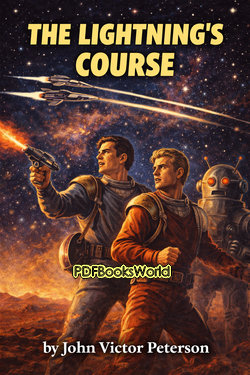
The Lightning's Course
by John Victor Peterson
Danger, Electricity, and Survival in a Scientific Future
The Lightning's Course by John Victor Peterson is a suspenseful science fiction adventure exploring the destructive power of electricity and humanity’s struggle to survive within a technologically advanced world. Written during the pulp science fiction era, the story combines scientific imagination with action and danger while examining how natural forces may become terrifying when connected with human experimentation and modern invention.
Peterson presents electricity not merely as a useful scientific discovery, but as a powerful and unpredictable force capable of reshaping civilization itself.
A Scientific Crisis Unfolds
The story centers upon unusual electrical phenomena or experimental technology connected with lightning and immense energy release. Scientists and engineers attempting to harness or study these forces gradually discover that the power involved may exceed human control.
As dangerous events intensify, storms, machinery failures, or strange atmospheric disturbances threaten communities and individuals alike. The growing crisis forces characters to confront both scientific uncertainty and physical danger while racing to prevent catastrophe.
Rather than portraying science as entirely safe or predictable, the narrative repeatedly warns about the risks of uncontrolled experimentation and overconfidence.
Power and Human Responsibility
A major theme throughout the story is the tension between scientific ambition and moral responsibility. Peterson repeatedly explores how technological progress may create enormous danger when pursued without caution or full understanding.
The work also reflects classic science fiction fascination with electricity, energy, and scientific innovation during a period when rapid technological advancement transformed modern life.
At the same time, the story emphasizes courage, cooperation, and rational thinking during moments of crisis and uncertainty.
This blend of scientific speculation and suspense gives the narrative much of its excitement.
Science Fiction Themes Explored Throughout the Story
- Electricity and Scientific Power: Advanced energy becomes both useful and dangerous.
- Human Ambition and Risk: Experimentation leads toward unpredictable consequences.
- Natural Forces and Catastrophe: Lightning and atmospheric energy create fear and destruction.
- Survival During Crisis: Characters struggle against technological and environmental danger.
- Science and Responsibility: Knowledge requires caution and ethical awareness.
John Victor Peterson’s Pulp Adventure Style
The Lightning's Course demonstrates John Victor Peterson’s talent for combining scientific concepts with suspenseful storytelling and energetic pacing. His writing remains vivid, dramatic, and strongly focused upon maintaining tension and excitement throughout the narrative.
Peterson consistently presents science fiction as both thrilling entertainment and a warning about uncontrolled technological power.
Why the Story Still Holds Science Fiction Interest
Modern readers continue finding The Lightning's Course engaging because its themes of energy, scientific responsibility, technological danger, and environmental power remain highly relevant today. The story also captures the imaginative excitement associated with classic pulp-era science fiction adventures.
For readers interested in speculative science, electrical phenomena, disaster fiction, scientific experimentation, and classic pulp science fiction, this work remains exciting, atmospheric, and imaginative.
Similar Genres
About the Author
John Victor Peterson was an American science fiction author whose imaginative stories appeared in the leading pulp magazines during the Golden Age of speculative fiction. Writing primarily in the 1940s and 1950s, Peterson crafted exciting tales of interplanetary exploration, futuristic technology, and daring scientific adventure. Explore John Victor Peterson books to discover the author's life, literary career, and access notable works, including Lie on the Beam , and more.