
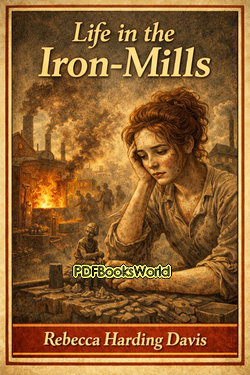
Life in the Iron-Mills; Or, The Korl Woman
by Rebecca Harding Davis
Smoke, Poverty, and Human Desperation Inside America’s Industrial World
Long before modern discussions about labor rights and industrial exploitation became common, Life in the Iron-Mills; Or, The Korl Woman by Rebecca Harding Davis exposed the harsh realities faced by factory workers in nineteenth-century America. First published in 1861, the novella shocked readers with its unflinching portrayal of exhausting labor, urban poverty, social inequality, and emotional hopelessness inside the rapidly expanding industrial economy.
Today, the work is considered one of the earliest and most important pieces of American social realism.
A City Covered in Smoke and Exhaustion
The story unfolds in a grim industrial town dominated by iron mills, smoke-filled air, dirty streets, and endless physical labor. Workers spend their lives trapped in exhausting routines that leave little room for comfort, education, or opportunity.
Davis creates an atmosphere of suffocating hardship where industrial progress benefits wealthy owners while laborers struggle simply to survive.
The setting itself becomes symbolic of emotional and social entrapment.
The Central Figures of the Story
At the heart of the novella stands Hugh Wolfe, an iron mill worker possessing artistic sensitivity and creative talent despite his harsh environment. His cousin Deborah, physically disabled yet deeply loyal to Hugh, also plays a major emotional role in the narrative.
The mysterious “Korl Woman,” a sculpture created from industrial waste material, becomes one of the story’s most powerful symbols.
- Hugh Wolfe represents buried talent crushed by poverty and labor
- Deborah embodies sacrifice, loneliness, and emotional devotion
- The Korl Woman sculpture symbolizes hunger, longing, and trapped humanity
Together, these elements create a deeply emotional social critique.
What Makes the Novella So Powerful?
Rather than presenting industrial poverty as distant background information, Davis forces readers to experience the emotional and physical exhaustion of working-class life directly.
The novella asks uncomfortable questions:
- Can talent survive under crushing poverty?
- Does society ignore the humanity of workers?
- Who benefits from industrial success?
- What happens when hope disappears?
These questions helped make the work groundbreaking for its time.
The Meaning Behind the “Korl Woman”
The sculpture created by Hugh Wolfe becomes the emotional center of the story. Formed from waste material produced in the iron mills, the figure appears desperate, unfinished, and emotionally tortured.
The artwork silently expresses desires for beauty, dignity, freedom, and a better life that industrial society refuses to satisfy.
Davis uses this image to symbolize the hidden emotional suffering of the working class.
The Literary Style of Rebecca Harding Davis
Davis writes with intense realism, emotional force, and vivid sensory detail. Smoke, heat, machinery, dirt, and exhaustion fill nearly every scene.
Unlike romanticized fiction of the era, her language confronts readers with uncomfortable social realities. Yet beneath the harshness remains deep compassion for the people trapped within the industrial system.
The combination of realism and emotional depth gives the novella lasting literary power.
Why Life in the Iron-Mills Still Feels Relevant
Life in the Iron-Mills continues to resonate because economic inequality, labor exploitation, and social invisibility remain important issues today. Davis reminds readers that industrial progress often hides enormous human suffering beneath its surface.
For readers interested in social realism, labor history, American literature, and stories about class struggle and human dignity, Rebecca Harding Davis’s novella remains a deeply moving and historically significant work.
Similar Genres
About the Author
Rebecca Harding Davis was an American author, journalist, and social reformer whose writing brought attention to the lives of ordinary working people during the nineteenth century. At a time when many writers focused on wealthy or privileged characters, Davis chose to portray factory workers, immigrants, women, and the poor with honesty and compassion. Explore Rebecca Harding Davis books to discover the author's life, literary career, and access notable works.