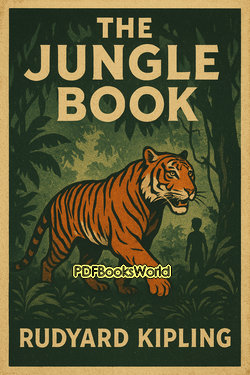
The Jungle Book
by Rudyard Kipling
The Jungle Book: A Wild Adventure of Courage and Belonging
The Jungle Book by Rudyard Kipling is one of the most beloved adventure classics ever written. Filled with unforgettable animal characters, thrilling jungle encounters, and timeless life lessons, the book has fascinated readers of all ages for generations.
Published in 1894, the collection blends fantasy, adventure, and moral storytelling into a rich literary world where the jungle feels alive with danger, wisdom, and wonder. At the heart of the stories is Mowgli, the “man-cub” raised by wolves, whose journey through the wild becomes a powerful tale of identity, friendship, and survival.
A World Ruled by the Law of the Jungle
The stories take place in the forests of India, where animals live according to strict codes known as the Law of the Jungle. Every creature has its place, and survival depends on respect, loyalty, and courage.
After being abandoned as a baby, Mowgli is adopted by a wolf pack and raised among the animals. Guided by the wise bear Baloo and the clever panther Bagheera, he learns the customs of the jungle and grows into a fearless young boy.
However, danger constantly follows him. The terrifying tiger Shere Khan believes Mowgli does not belong in the jungle and waits for the chance to destroy him. As Mowgli grows older, he must decide whether he truly belongs with the animals or among humans.
More Than Just Mowgli’s Story
Although Mowgli’s adventures are the most famous part of the book, The Jungle Book is actually a collection of several stories. Readers also encounter brave and memorable characters like Rikki-Tikki-Tavi, the fearless mongoose who protects a family from deadly cobras, and Kotick, the rare white seal searching for safety for his people.
Each story explores survival, loyalty, bravery, and the struggle to find one’s place in the world.
Themes That Give the Book Lasting Power
1. Identity and Belonging
Mowgli’s greatest challenge is understanding where he truly belongs. Raised by wolves but born human, he constantly moves between two worlds without fully fitting into either one.
This feeling of being different gives the story emotional depth and helps readers connect with Mowgli’s personal journey.
2. Loyalty and Friendship
Throughout the jungle, loyalty is treated as one of the highest values. Baloo, Bagheera, and the wolf pack risk their lives to protect Mowgli, showing that true family is built through trust and devotion rather than blood alone.
3. Courage and Survival
The jungle is filled with dangers, from predators to natural threats, and survival requires bravery. Mowgli repeatedly faces fear and uncertainty, learning that courage often comes from wisdom and self-control rather than strength alone.
4. Rules and Responsibility
The Law of the Jungle plays a central role throughout the stories. Kipling presents rules not as limitations, but as necessary principles that protect order and harmony in the wild.
Rudyard Kipling’s Storytelling Style
Kipling’s writing creates a vivid atmosphere filled with mystery, movement, and excitement. The jungle itself almost becomes a living character, rich with sounds, dangers, and hidden beauty.
His storytelling balances thrilling action with deeper philosophical ideas about society, discipline, and human nature. This combination allows the book to appeal both to younger readers seeking adventure and adults looking for deeper meaning.
Why The Jungle Book Remains Popular
More than a century after its publication, The Jungle Book continues to inspire readers, filmmakers, and storytellers around the world. Its themes of friendship, courage, and self-discovery remain timeless.
The book has also inspired numerous film adaptations, television series, stage productions, and animated classics that introduced Mowgli and his animal companions to new generations.
Even today, readers are drawn to the magical world of the jungle and the unforgettable lessons hidden within its stories.
Final Thoughts
The Jungle Book is much more than a children’s adventure story. Beneath its exciting jungle encounters lies a thoughtful exploration of identity, community, responsibility, and the balance between freedom and law.
Rudyard Kipling created a literary world that feels both imaginative and deeply human. Through Mowgli’s journey and the many unforgettable animal characters, the book continues to remind readers that courage, loyalty, and wisdom are essential qualities in every world, whether human or wild.
Similar Genres
About the Author

Rudyard Kipling was an English novelist, poet, journalist, and short story writer whose vivid storytelling and unforgettable characters made him one of the most influential literary figures of the late nineteenth and early twentieth centuries. Born in Bombay, British India, in 1865, Kipling drew deeply from his experiences in India and his fascination with history, adventure, and diverse cultures. Explore Rudyard Kipling books to discover the author's life, literary career, and access notable works, including Just So Stories, Kim, The Irish Guards in the Great War, Volume 1 (of 2) , and more.